EV Fleet Leasing vs Buying: A Decision Framework For Fleet Operators
By Shaurya Rathore8 min read
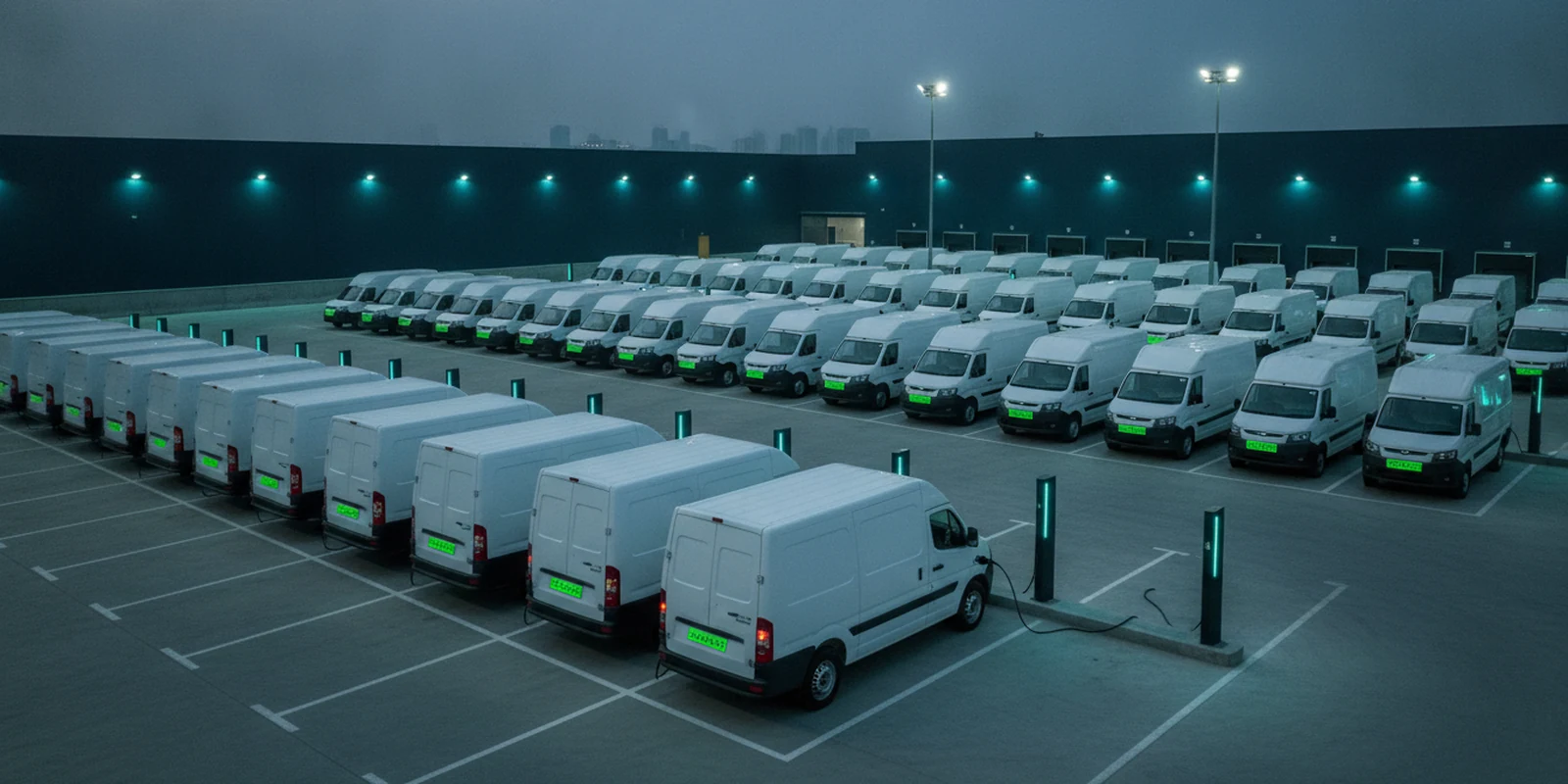
EV Fleet Leasing vs Buying
💡 EV Fleet Leasing vs Buying: Key Highlights
- Electric goods carriers were 3.7% of new registrations in India in January–July 2026 (13,973 of 3,74,730) — too thin a used market for anyone to underwrite a four-year residual.
- Battery pack prices fell 8% in 2025 to a record-low $108/kWh — good for your next purchase, bad for the resale value of the vehicle you already own.
- NITI Aayog named high financing costs a core constraint on electric freight in September 2026, urging leasing models to close the cost-of-capital gap with diesel.
- Duty cycle decides this more often than fleet size. Taxi and last-mile operators usually lease; corporate fleets usually buy.
Every fleet electrification plan reaches one unglamorous question: do the vehicles go on your balance sheet, or somebody else’s? EV fleet leasing has become the default answer for much of India’s commercial fleet market — but default is not the same as correct. The lease-versus-buy arithmetic inherited from diesel does not survive contact with an electric asset. Our EV fleet TCO comparison for Indian fleets settles what an electric fleet costs; this piece asks the question above it — who should hold the asset — for last-mile delivery, urban taxi and corporate fleets. The framework is the same for all three. The answer is not.
The Three Numbers That Decide EV Fleet Leasing vs Ownership
Start from what makes an electric asset different. A commercial EV is a vehicle wrapped around a battery, and the two depreciate on different curves: chassis and drivetrain age predictably, the battery ages with cycles, depth of discharge and heat. A van that ran 250 km a day in Chennai traffic is a different asset at year four from an identical unit on a 60 km corporate shuttle. Ownership means carrying that divergence yourself.
1. Your real cost of capital
As of 7 September 2026 the RBI’s policy repo rate stands at 5.25%, with bank base rates at 8.40–10.00% and overnight MCLR at 7.80–8.00%. Commercial-vehicle lending prices at a spread over those benchmarks, and the spread you are quoted reads directly on how a lender scores your collateral. NITI Aayog member Rajiv Gauba identified high financing costs as one of three structural constraints on electric freight in India, urging leasing models and blended finance to pull the cost of capital for e-trucks closer to diesel. A wide spread means the market cannot value your asset — and a lessor buying thousands of identical vehicles funds them more cheaply than you do.
2. Residual value — the number nobody can quote yet
Between January and July 2026, 3,74,730 goods carriers were registered in India and only 13,973 were electric — a 3.7% share. In the heavy segment it is starker: 821 units out of 1,96,103. No used-vehicle market forms behind volumes that thin, so no dealer, bank or valuer can give you a defensible four-year residual for a commercial EV today. Compounding it, lithium-ion pack prices fell 8% in 2025 to a record-low $108/kWh. Cheaper packs make your next vehicle cheaper and your current one harder to sell against it. Buying is an unhedged position on that curve.
3. Where the asset sits — and who collects the tax shield
The old shorthand that leasing keeps vehicles off the balance sheet no longer holds: under Ind AS 116 most operating leases are recognised as a right-of-use asset with a matching liability, so gearing ratios see them either way. What genuinely differs is who owns the depreciation and the input tax credit. An owner with consistent taxable profits captures both; a lessor captures them instead and prices part of the benefit back into the rental — a good trade if your own profits are too thin to absorb the shield, a poor one if they are not.
Duty Cycle Moves The Answer More Than Fleet Size Does
Two operators running fifty identical vans can correctly reach opposite answers, because duty cycle drives battery degradation — and battery degradation is the risk a lease actually prices.
Last-mile delivery: lease the volatility, own the core
Last-mile rounds are high-kilometre, high-cycle and tied to client contracts far shorter than the vehicle’s life — and festive peaks need vans for four months that you cannot justify for six years. The pattern that works is a split book: own the base fleet your committed volumes support, and use leasing arrangements for commercial electric vehicles for the contract-linked and seasonal layer on top.
Urban taxi and aggregator fleets: leasing usually wins outright
Taxi duty cycles are the most punishing in Indian commercial mobility — often 200 km or more a day with frequent fast charging, precisely the profile that pulls battery health down fastest, and the one segment where a pack replacement can land inside the operating window. Per-kilometre and fixed-monthly structures move that exposure to a counterparty large enough to absorb it, and match cost to revenue when margin per trip is measured in rupees.
Corporate and employee-transport fleets: buying is often the right call
The mirror image: modest daily kilometres, gentle depot AC charging, captive demand controlled for years. The asset degrades slowly, the holding period amortises the premium, and the parent company usually has both the taxable profits to use the depreciation and the standing to borrow at a sensible spread. Paying a lessor to hold a risk you were well placed to carry is margin given away.
A Practical Framework For The Acquisition Decision
There is no universal answer to EV fleet leasing versus ownership, only a defensible one for your fleet. Run it down this table honestly and weigh the column carrying the signals that would cost most if you were wrong.
| What you are looking at | Leans toward leasing | Leans toward buying |
|---|---|---|
| Cost of capital | Credit expensive or hard to access; wide quoted spreads | Committed lines priced close to benchmark rates |
| Residual visibility | No comparable used sales in your vehicle class | A resale channel you have actually transacted through |
| Duty cycle | 200+ km/day, frequent fast charging | Under ~80 km/day on overnight depot AC charging |
| Contract horizon | Client contracts shorter than the asset’s life | Captive demand you control for six years or more |
| Tax position | Little taxable profit to absorb depreciation | Consistent profits; input tax credit fully usable |
| Fleet size | Below ~50 vehicles — no scale to spread residual risk | Beyond ~150 vehicles — the book diversifies itself |
Thresholds are rules of thumb, not hard cut-offs.
Then put three questions to any lessor before signing. What battery state of health is warranted at hand-back, and who measures it? What happens to the rental if monthly kilometres run 30% over plan? And what is the early-termination position if the client contract behind this fleet goes away? A lessor who answers all three cleanly is pricing risk; one who does not is handing it back with extra steps.
Whichever Route You Take, The Data Problem Is Identical
Here is the part both camps underestimate. Leasing does not remove the need to measure the fleet — it makes measurement contractual. Rentals are increasingly priced against assured kilometres and battery state of health at hand-back, so an operator without its own record of energy per kilometre, utilisation and SOH trend negotiates renewals on the lessor’s numbers. Owners need the same evidence to substantiate a residual at sale.
That record has to start on day one: state of health only reveals itself as a trend over months and cannot be reconstructed later. In practice teams capture it in a fleet operating system like YoMobility, with charging costs and driver reimbursements consolidated through payment management so cost per kilometre is measured, not estimated. Owned or rented, the operator who can prove what the vehicle actually did negotiates from the stronger side — the argument behind what managing an EV fleet properly returns.
Frequently Asked Questions
Rarely on headline cost — the rental contains the lessor’s funding cost, margin and the price of the residual risk they absorb. Leasing wins when your cost of capital is high, your duty cycle makes battery degradation a real exposure, or client contracts are shorter than the vehicle’s life. Buying wins when you borrow cheaply and can use the depreciation shield.
Entirely a matter of contract, which is why the state-of-health clause matters more than the rental. Most structures move some battery risk to the lessor, but many set a minimum SOH at hand-back with penalties below it and cap the kilometres assumed. Ask who measures SOH, by what method, and what happens if you exceed plan.
Largely, yes. Most leases are recognised as a right-of-use asset with a matching liability, so gearing ratios reflect them much as debt-funded ownership would. What remains is risk transfer and flexibility, not balance-sheet cosmetics.
You buy the vehicle without its pack and pay a separate monthly or per-kilometre fee for the battery. That lowers the upfront cost and isolates degradation risk, but the vehicle becomes hard to resell independently of the battery contract — check the assignment terms first.
Sources: NITI Aayog / PIB — PACT and ZET Marketplace launch, 7 Sep 2026 | Reserve Bank of India — current policy and lending rates | Vahan Dashboard, Ministry of Road Transport & Highways — vehicle registrations | BloombergNEF — Lithium-Ion Battery Price Survey
Manage Your Fleet’s EV Economics Today
Lease or buy, the operator who can prove energy per kilometre, utilisation and battery health negotiates from the stronger side. See how YoMobility captures all three.
Book a Free DemoYoMobility EV-FMS
EV fleet management softwareRun every vehicle, driver, charge and payment from one platform. Charge on multiple networks, and get one invoice for all of it.
Resources
Keep reading
EV Battery Replacement Cost For Fleets: What Drives The Quote — And When Replacing Is The Wrong Call
💡 EV Battery Replacement Cost: Key Highlights The EV battery replacement cost is the largest single repair bill a fleet […]

Electric Scooter For Delivery Fleets: Specs That Survive A Full Rider Shift
💡 Electric Scooter For Delivery Fleets: Summary An electric scooter for delivery and an electric scooter for commuting are usually […]
PM E-DRIVE Scheme In 2026: What Fleets Can Still Claim And What Already Closed
💡 PM E-DRIVE Scheme: Key Highlights If you are timing an electric vehicle purchase for a commercial fleet, the PM […]
See YoMobility on your fleet
Tell us how many vehicles you run and where they charge. We'll show you how they'd run on one platform, with one invoice.
Or contact us