Electric Heavy Duty Truck In India: Deployments Grew 4x As NITI Aayog Launches PACT
By Shaurya Rathore8 min read
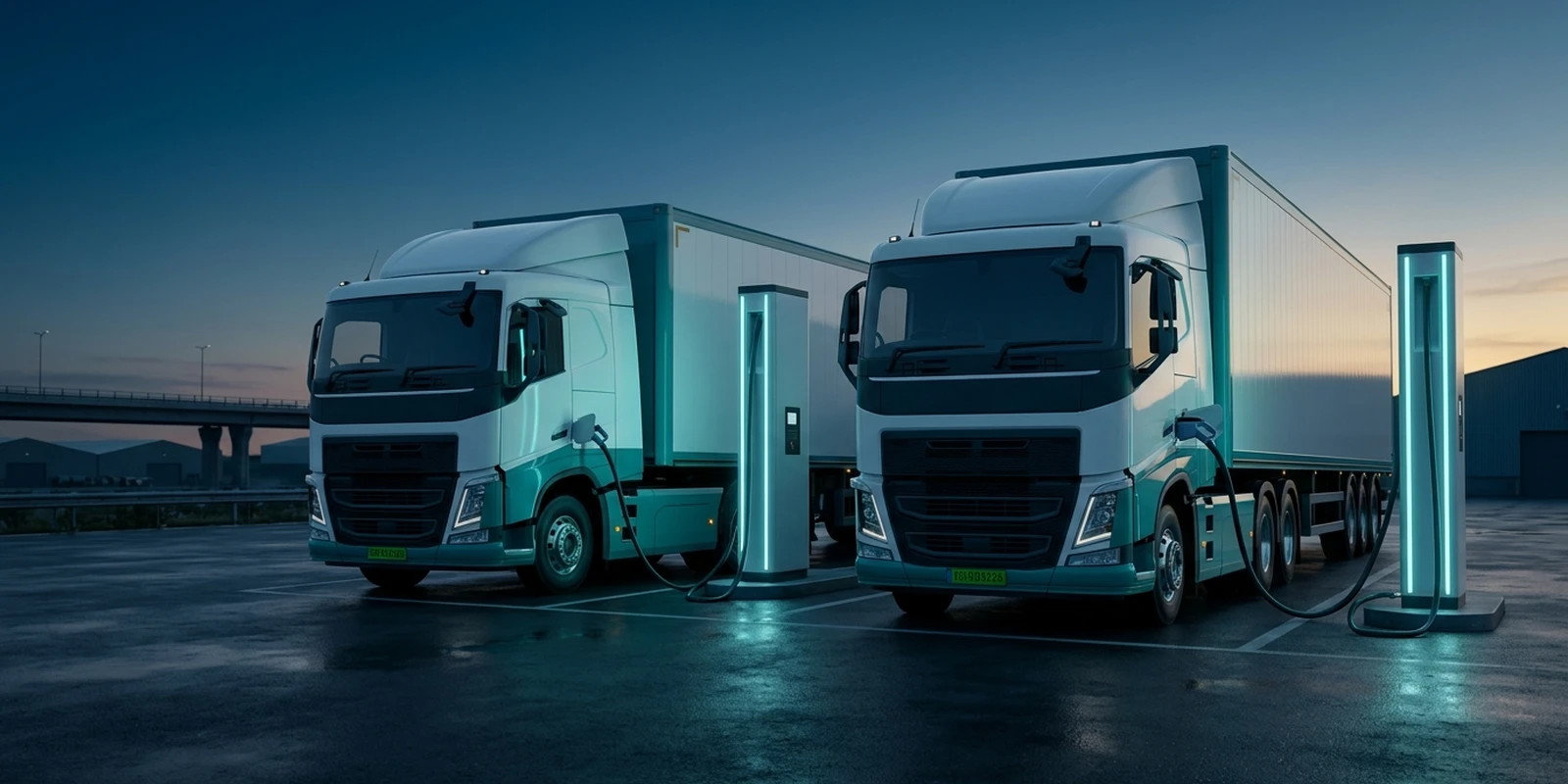
Electric Heavy Duty Truck In India: Deployments Grew 4x
💡 Electric Heavy Duty Truck In India: Key Highlights
- E-freight deployments grew more than fourfold — 201 vehicles in FY25 to 826 in FY26 — with over 3,000 e-MHD trucks now in operation.
- Only around 800 heavy-duty electric trucks were sold in all of 2025, in a country where 70% of freight moves by road.
- Heavy trucks are 3–4% of the vehicle fleet but over a third of transport-sector carbon emissions.
- NITI Aayog launched PACT and the ZET Marketplace on 7 September 2026 to aggregate freight demand into corridor-level projects.
- The blockers are commercial, not technical: fragmented operators, high financing costs, no corridor charging plan.
India deployed 826 electric freight vehicles in FY26, up from 201 in FY25 — a more than fourfold jump — and the installed base of electric medium- and heavy-duty vehicles (e-MHDVs) has crossed 3,000 units. That is the honest scale of the electric heavy duty truck in India today: a real market growing fast in percentage terms, from a base small enough that one large operator could account for most of it.
On 7 September 2026, NITI Aayog moved to change that curve. At the 5th e-FAST India Summit, Member Rajiv Gauba launched the Platform for Aggregating Clean Transport (PACT) and a Zero Emission Truck (ZET) Marketplace — market infrastructure aimed not at building trucks, but at making demand for them visible enough to finance and plan charging around. For fleet operators, the launch matters less than what the government named as the obstacles.
Electric Heavy Duty Truck In India: The Deployment Numbers
e-freight vehicles deployed in FY26, up from 201 in FY25
electric medium- and heavy-duty trucks in operation in India
heavy-duty electric trucks sold in all of calendar 2025
Those three figures answer different questions, and conflating them is how e-truck market sizing goes wrong. The 201-to-826 move is a flow: vehicles deployed in one year. The 3,000-plus figure is the stock, every e-MHD truck working in India. The ~800 units sold in 2025 is the narrowest cut — the genuinely heavy end, where payloads, duty cycles and financing tickets are largest.
A stock of 3,000 units has concrete consequences for anyone specifying vehicles. Model choice is narrow, service networks thin out fast beyond the metros, and there is effectively no secondary market — so neither you nor your lender can point to a comparable resale. None of that makes an electric heavy duty truck in India a bad decision. It means the decision is being made without the reference data a diesel purchase takes for granted.
Why Freight Outranks Every Other Segment For Decarbonisation
Gauba put the disproportion plainly: heavy trucks are 3–4% of India’s vehicle fleet but contribute over a third of transport-sector carbon emissions. Independent modelling agrees — the International Council on Clean Transportation puts these trucks at roughly 3% of India’s on-road fleet and 44% of well-to-wheel road transport CO₂.
Add the fact that 70% of India’s freight moves by road and the priority writes itself: no other vehicle category delivers this much emissions reduction per unit electrified. For operators the read is about sequencing — regulatory pressure and shipper scope-3 requirements tend to arrive before cost parity does, and the fleets that get squeezed are the ones that begin evaluating only when a contract makes it mandatory.
What Is Actually Blocking Electric Truck Scale-Up
Gauba named three constraints: fragmentation among logistics operators, high financing costs, and no coordinated corridor planning. With MoRTH Secretary V. Umashankar’s remarks on battery governance, they describe a commercial problem, not an engineering one.
1. The cost of capital, not the sticker price
ICCT’s bottom-up costing put model-year 2023 battery-electric trucks at 4–6 times the upfront cost of a diesel equivalent on full-duty specifications; units deployed in India, mostly lighter pilot applications, run 2–3 times. Gauba’s ask targeted the financing layer on top of that gap: blended finance, leasing models and stronger data systems to bring the cost of capital for electric trucks closer to diesel equivalents. Lenders are not pricing physics, they are pricing uncertainty — a diesel truck carries decades of default and resale history; an Indian e-truck carries about three years of it.
2. Battery residual value is effectively unpriced
Umashankar was direct about the fix: battery health monitoring and new operating models for high-utilisation vehicles can "improve transparency, strengthen resale value, reduce financing risks, and unlock greater investment." The operator consequence is immediate — if you cannot evidence pack state of health at year five, the financier assumes the worst case and prices it into your instalment today. State of health only emerges as a trend over months, so it must be captured from day one through proper EV vehicle tracking, or it is lost.
3. Nobody owns the corridor charging plan
Depot charging solves return-to-base duty cycles. Long-haul freight is not. ICCT finds electric trucks beating diesel on total cost of ownership across daily distances of 200–700 km by model year 2030 — but only with a robust charging network, because the cheapest configuration sizes the battery below daily demand and covers the rest en route. Highway charging is a precondition for the economics, not an accessory. No single operator can justify building it: the first mover funds a corridor its competitors then use. That coordination failure is what PACT targets.
What PACT And The ZET Marketplace Actually Do
PACT is a demand-aggregation platform. It collects freight demand from shippers, logistics service providers (LSPs) and other stakeholders and translates it into deployment opportunities on identified freight corridors, convening shippers, LSPs, manufacturers, financiers and charge point operators (CPOs) around the same corridor at the same time.
The mechanism matters more than the acronym. A CPO will not build high-power charging on a highway stretch for one operator’s twelve trucks; it will consider three hundred committed trucks pledged across eleven shippers. The same arithmetic runs upstream to an OEM planning a production run and downstream to a lender underwriting a pool on a known route rather than one borrower on an unknown one. Aggregated demand turns each of those from a bet into an underwriting exercise. The ZET Marketplace is the transactional counterpart, connecting e-truck manufacturers, LSPs, CPOs, financiers and technology companies so those partnerships can actually be formed.
Both sit under e-FAST India, the NITI Aayog-led freight platform running since 2022, now in its fifth summit. The supply-side scaffolding Gauba credited — PLI schemes for automobiles and advanced chemistry cells, plus FAME, PM e-DRIVE, PARIVARTAN and PM e-Bus Sewa — is covered in our reporting on the PLI Auto scheme’s ₹44,326 crore investment and on rare-earth magnet demand for India’s EV motors. PACT is the coordination layer above it.
What It Means For Freight Fleet Operators
Treat the launch as a leading indicator, not an event. Over the next 12–18 months three outputs are worth tracking, because each moves a variable in your business case: named freight corridors with published charging build-out plans, which tell you which lanes electrify first; new financing instruments — blended-finance vehicles, leasing and battery-as-a-service structures that shift residual risk off your balance sheet; and aggregated shipper demand commitments you can join rather than lead, which is how a mid-sized operator gets corridor infrastructure without funding it.
None of that argues for waiting. Two things are worth doing this quarter regardless. Run a lane-level audit to find the routes already inside round-trip depot range — those are electrifiable today and do not depend on corridor charging at all. Then start capturing energy per kilometre, session cost and battery health on whatever EVs you already run: that dataset is what a financier will ask for, and a fleet operating system like YoMobility makes it a by-product of operations rather than a project. For vehicle selection see our comparison of the best electric trucks for fleet operators in India, and Delhi-NCR operators should check the PARIVARTAN scheme guidelines. Corridor-level charging management is the operational problem right behind the policy one.
Frequently Asked Questions
Source: e-FAST India launches PACT to support accelerated zero-emission freight deployment — Press Information Bureau, NITI Aayog, 07 September 2026 (Release ID 2307592) | Shri Rajiv Gauba launches PACT and ZET Marketplace — Press Information Bureau, NITI Aayog, 07 September 2026 (Release ID 2307575).
Manage Your Freight Fleet’s Electric Transition Today
The operators who benefit first from corridor charging and new financing will already be capturing energy, cost and battery-health data. YoMobility gives freight fleets that layer.
Book a Free DemoYoMobility EV-FMS
EV fleet management softwareRun every vehicle, driver, charge and payment from one platform. Charge on multiple networks, and get one invoice for all of it.
Resources
Keep reading
CAFE Norms 2027-2032 Are Final: What EV Super-Credits Mean For Fleet Buyers
💡 CAFE Norms 2027-2032: Key Highlights India’s CAFE norms 2027-2032 are now final. On 30 September 2026 the Ministry of […]
State EV Policy Scores Just Jumped: What The India Electric Mobility Index 2025 Means For Fleets
💡 India Electric Mobility Index 2025: Key Highlights India’s state EV scorecard moved a long way in twelve months. The […]
India EV Ecosystem Report 2026: 46x Sales Growth Since 2016
📊 India EV Ecosystem Report 2026: Key Highlights EV sales grew 46x since 2016 — ~50,000 units (2016) to 2.3 […]
See YoMobility on your fleet
Tell us how many vehicles you run and where they charge. We'll show you how they'd run on one platform, with one invoice.
Or contact us