Electric Last-Mile Logistics in India: Why Fleets Should Go Electric Now
By YoMobility Team9 min read
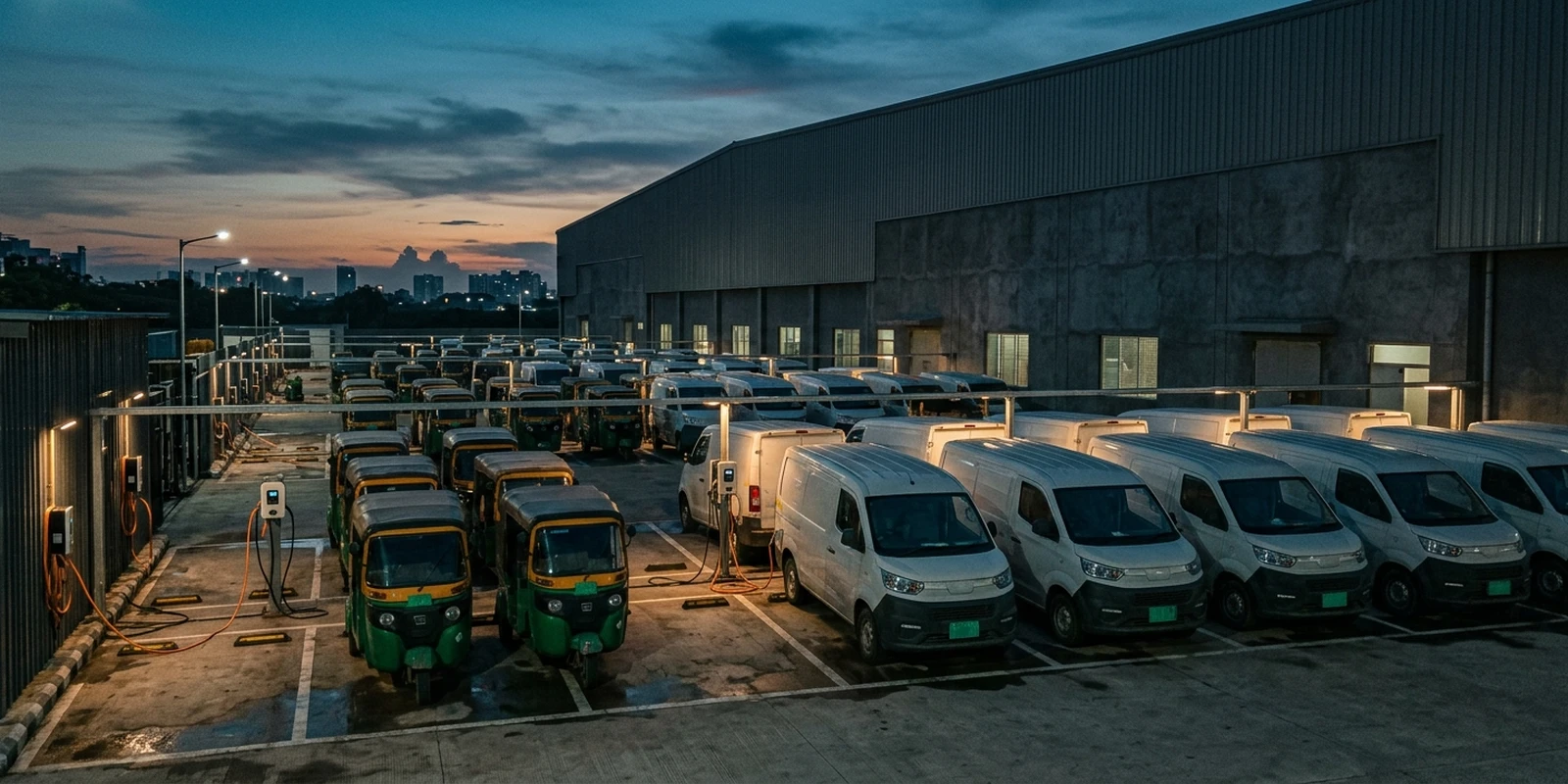
Electric Last-Mile Logistics In India
💡 Electric Last-Mile Logistics India: Key Highlights
- Electric 3-wheeler and van fleets already run at ₹0.50–₹2 per km versus ₹6–₹10 per km for diesel counterparts on comparable routes
- India’s e-commerce and quick-commerce last-mile market is worth roughly $8 billion in 2026, compounding at over 12% a year
- Electric commercial vehicle sales more than doubled in FY2025–26 as 3PLs and D2C logistics providers scaled EV fleets
- The PM E-DRIVE scheme earmarks incentives for roughly 3.2 lakh electric three-wheelers used commercially, through 31 March 2026
- A 100-van metro fleet running 80–120 km/day can save well over ₹1 lakh per vehicle annually in fuel costs alone versus diesel
- Fleets that pair EVs with an AI-powered operating system convert charging, energy and payment data into fewer missed SLAs and lower cost per drop
If you run a last-mile delivery operation in an Indian metro, the case for electric last mile logistics India operators can build on has stopped being a sustainability talking point and become a straightforward unit-economics decision. Urban delivery volumes are rising faster than most 3PLs can add diesel vehicles profitably, fuel costs remain volatile, and municipal emissions rules are tightening in Delhi-NCR, Bengaluru, Mumbai and Hyderabad. For a founder or operations head deciding where to place the next 50 or 100 vehicles, the numbers increasingly point one way: electric.
This isn’t a claim that EVs solve every problem for every fleet. Range, charging access and driver habits still matter, and a mixed-fleet transition usually beats an overnight switch. But for the specific job last-mile delivery vehicles do — short stage lengths, frequent stops, return-to-depot cycles, 80–120 km a day in dense urban corridors — electric vehicles now outperform diesel and CNG on a fully loaded cost basis in most major Indian cities. Below is the strategic case, the numbers behind it, and where an AI-powered operating system like YoMobility fits into the picture.
Why Urban Delivery Demand Is Outpacing Fleet Capacity
India’s last-mile delivery market is worth an estimated $8 billion in 2026 and is compounding at roughly 12–13% a year, driven by quick-commerce, e-commerce and D2C brands that now promise groceries in 10–20 minutes and fashion orders within hours in top-tier cities. That growth curve has already forced Flipkart to run more than 20,000 electric vehicles across its last-mile network, while Amazon India has been steadily adding electric delivery vans to its own fleet. When the largest players are electrifying at this pace, it’s a signal for mid-size 3PLs and D2C logistics startups too — not because it’s fashionable, but because the delivery economics increasingly require it.
Consider a simple scenario: a 3PL running 100 delivery vans across a metro, each doing 80–120 km a day across 40–60 stops. At that duty cycle, fuel is one of the largest variable costs in the P&L — and it’s also the cost most exposed to price shocks the operator can’t control. Electrifying this kind of fleet doesn’t just cut a line item; it removes a source of margin volatility that founders have historically had to price into every contract with a shipper or marketplace.
The Real Cost Of Diesel In Last-Mile Delivery
Diesel and CNG mini-trucks typically run at ₹6–₹10 per km all-in once fuel, maintenance and downtime are counted. Electric vans and cargo three-wheelers doing the same job run at roughly ₹0.50–₹2 per km depending on tariff and vehicle class — a 60–80% reduction in the single biggest variable cost of a delivery route. Fleet operators using electric mini-trucks in real-world Indian operations have reported savings north of ₹1 lakh per vehicle per year against diesel equivalents, even before accounting for lower scheduled maintenance (EVs have no engine oil, timing belts or exhaust systems to service).
Here’s how to think about it as a CXO: every diesel van you add today locks in a cost structure that gets worse as fuel prices rise and as cities tighten emissions norms for commercial fleets. Every electric van you add locks in a cost structure that gets better as your city’s grid tariffs stabilise and your charging footprint matures. Over a 5-year vehicle life, that compounding difference is the core of the electric last-mile logistics India business case — not a single year’s fuel bill, but the trajectory of your unit economics over the vehicle’s full life.
Electric Last Mile Logistics India: How It Changes Unit Economics
Cost per kilometre is the headline, but cost per drop is what actually shows up in a 3PL’s contract margins. A van that costs less to run per km, but also completes more drops per shift because it isn’t queuing for diesel or sitting in the workshop, moves the needle twice. In practice, teams usually see three levers stack together in an electrified last-mile fleet:
- Lower energy cost per km — the ₹6–₹10 vs ₹0.50–₹2 gap described above, applied across every route, every day.
- Lower unscheduled downtime — fewer moving parts means fewer workshop days per vehicle per year, which directly increases the number of shifts a van is actually available for dispatch.
- Predictable energy spend — grid tariffs move in narrower bands than diesel pump prices, which makes route-level P&L forecasting materially easier for finance teams.
None of these levers show up automatically, though — they depend on how well the fleet is orchestrated. This is exactly where an AI-powered operating system like YoMobility’s EV fleet management software earns its place: it unifies vehicle telemetry, charging status and payment data into one view, so an operations lead isn’t reconciling three separate systems to answer the simple question, “what did this van cost us today?”
SLA And Uptime Advantages Fleet Managers Should Know
SLA misses in last-mile delivery are rarely about the vehicle breaking down mid-route — they’re usually about a van running out of charge or fuel at the wrong moment, or arriving at the depot too late to complete its next shift. Electric last-mile logistics in India actually reduces this risk when charge windows are planned properly: unlike a diesel van that needs a detour to a fuel station, an EV can top up predictably during natural dwell time — loading, driver breaks, end-of-shift depot returns — if the fleet’s software surfaces real-time state-of-charge (SOC) and flags vehicles that need a charge window before their next route.
In dense corridors like Delhi NCR, Bengaluru and Hyderabad — where couriers already run 20–60% of last-mile fleets on electric two-wheelers — the operators seeing the fewest SLA misses are the ones that treat charge-window planning as a first-class scheduling input, the same way they treat driver shifts or delivery time windows. This is a software and process discipline, not a hardware limitation of EVs.
Sustainability And ESG Pressure On 3PLs And Startups
Beyond unit economics, most large shippers and marketplaces are now asking their logistics partners for emissions data as part of vendor onboarding and renewal — a trend that will only intensify as more enterprise brands publish scope 3 targets. A 3PL or D2C logistics startup that can show a growing share of electric last-mile logistics in its India operations has a real commercial edge in these conversations, separate from the cost savings. It’s also a straightforward story to tell investors: lower operating cost, lower emissions, same or better delivery SLAs.
The central government has backed this shift financially through schemes like PM E-DRIVE, which earmarks incentives for roughly 3.2 lakh electric three-wheelers used for commercial purposes — a segment that includes a large share of India’s cargo and last-mile delivery vehicles — alongside support for public charging infrastructure. Fleet operators should track eligibility rules closely, since incentive structures and deadlines shift as scheme budgets are allocated.
How YoMobility Orchestrates Electric Last-Mile Fleets
An AI-powered operating system like YoMobility can turn the scattered signals of an electrified fleet — vehicle SOC, charger availability, energy tariffs, driver reimbursements — into one operational picture. For a 3PL running 50 delivery vans in Delhi or 100 across a metro, that typically means: real-time vehicle tracking so dispatchers know which vans are charge-ready before assigning routes, consolidated fleet analytics that show true cost per drop by vehicle and route, and automated reconciliation of charging spend across public and depot chargers so finance isn’t manually matching invoices from multiple CPOs every month.
The strategic point isn’t that software replaces good fleet judgement — it’s that at 50+ vehicles, spreadsheets and driver WhatsApp groups stop scaling, and the operators who electrify without also upgrading their operating layer usually give back a chunk of the cost advantage in avoidable downtime and reconciliation overhead.
Getting Started: A Practical Adoption Path
Teams that get electric last-mile logistics right in India rarely start with a full fleet swap. In practice, a workable path looks like this: run a 10–15 vehicle pilot on your densest, shortest-stage routes for 60–90 days; track cost per km and cost per drop against your existing diesel baseline using the same reporting cadence; use that pilot data to negotiate charging access (depot AC plus a public DC network) before scaling; and only then expand toward the 50- or 100-vehicle mark, segment by segment. Fleets that skip the pilot and go straight to scale tend to discover their charging and reporting gaps only after they’re expensive to fix.
If your delivery density is high but your average route is short, prioritise overnight depot charging over public fast-charging — it’s cheaper per kWh and doesn’t compete with your drivers’ time. If you’re expanding across multiple micro-fulfilment zones, prioritise a platform that can unify reporting across all of them from day one, rather than bolting on a fleet system after the fact. Talk to YoMobility to model your own fleet’s tariff and TCO strategy before committing to vehicle counts.
Frequently Asked Questions
Common questions on electric last-mile logistics in India for fleet operators and 3PLs.
Sources: PM E-DRIVE Scheme — Ministry of Heavy Industries (PIB) | SIAM Q2 FY2025-26 Vehicle Sales Data | Flipkart — Empowering Delivery Fleets for India’s EV Transition
Model Your Electric Last-Mile Fleet Strategy Today
YoMobility unifies vehicles, charging, energy and payments for last-mile EV fleets — from a 10-vehicle pilot to a 500-vehicle metro operation.
YoMobility EV-FMS
EV fleet management softwareRun every vehicle, driver, charge and payment from one platform. Charge on multiple networks, and get one invoice for all of it.
Resources
Keep reading
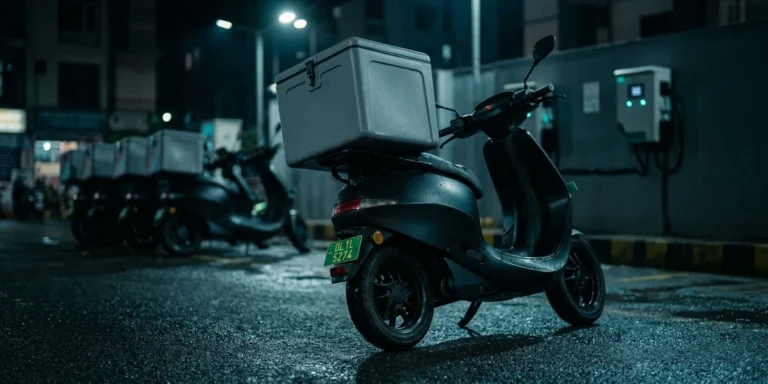
Electric Scooter For Delivery Fleets: Specs That Survive A Full Rider Shift
💡 Electric Scooter For Delivery Fleets: Summary An electric scooter for delivery and an electric scooter for commuting are usually […]
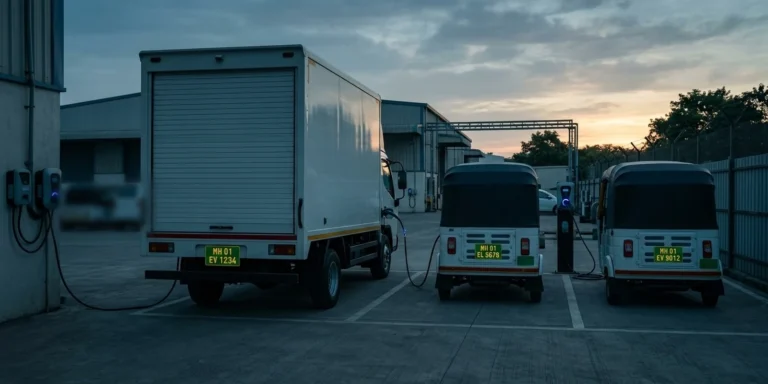
PM E-DRIVE Scheme In 2026: What Fleets Can Still Claim And What Already Closed
💡 PM E-DRIVE Scheme: Key Highlights If you are timing an electric vehicle purchase for a commercial fleet, the PM […]
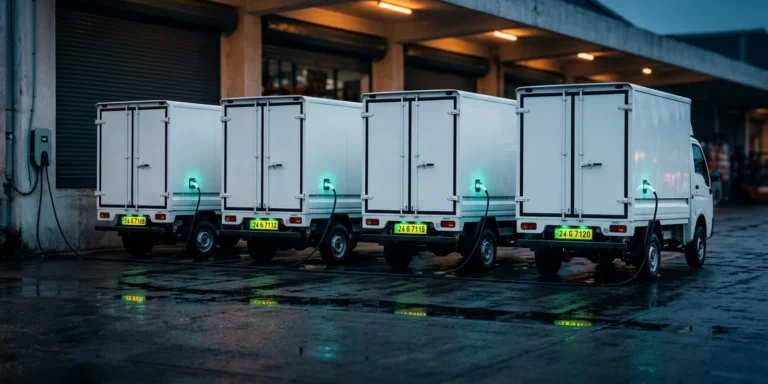
CNG vs EV For Commercial Vehicles: The Comparison Indian Fleets Actually Face
💡 CNG vs EV For Fleets: Key Highlights This is for one reader: the fleet owner replacing a diesel light […]
See YoMobility on your fleet
Tell us how many vehicles you run and where they charge. We'll show you how they'd run on one platform, with one invoice.
Or contact us