Driver Monitoring System For EV Fleets: What The Camera Sees And What It Should Change
YBy YoMobility Team10 min read
Driver Monitoring System For EV Fleets
💡 Driver Monitoring System: Summary
Half the data is already yours. Speeding and harsh driving come from telematics. A camera adds only what happens inside the cab: eyes, gaze, phone.
Speed is the biggest recorded killer. Over-speeding accounted for 68.1% of India’s 1,72,890 road deaths in 2023, and no camera is needed to catch it.
The factory drowsiness warning skips most urban fleets. AIS-184 exempts N1 light goods vehicles and switches on only above 60 km/h for buses and trucks.
Alerts without owners change nothing. Safety improves when every alert tier has a named reviewer, a response time and a coaching slot.
Diesel scorecards mis-rank EV drivers. Regenerative braking and instant torque change what “harsh” means in the data.
A driver monitoring system is usually bought as a camera and judged on detection: does it catch the yawn, the glance at a phone, the eyes closing at 2 a.m.? Most current units do. Whether your safety numbers actually move depends on things the hardware cannot supply: who sees the alert, how fast, what they say to the driver, and whether the driver believes the system is there to protect them or to catch them.
This guide is for depot and operations managers running driver fleets at scale: last-mile vans, taxi and ride-hail fleets, and corporate staff transport. If you are choosing an ADAS package for one private car, the spec sheet is your answer; the rest of this is about running the loop. In-cab video of a named driver is personal data, so read this alongside our guide to DPDP Act compliance for fleet driver data, which covers the legal framework this post does not repeat.
What A Driver Monitoring System Detects, And What Telematics Already Tells You
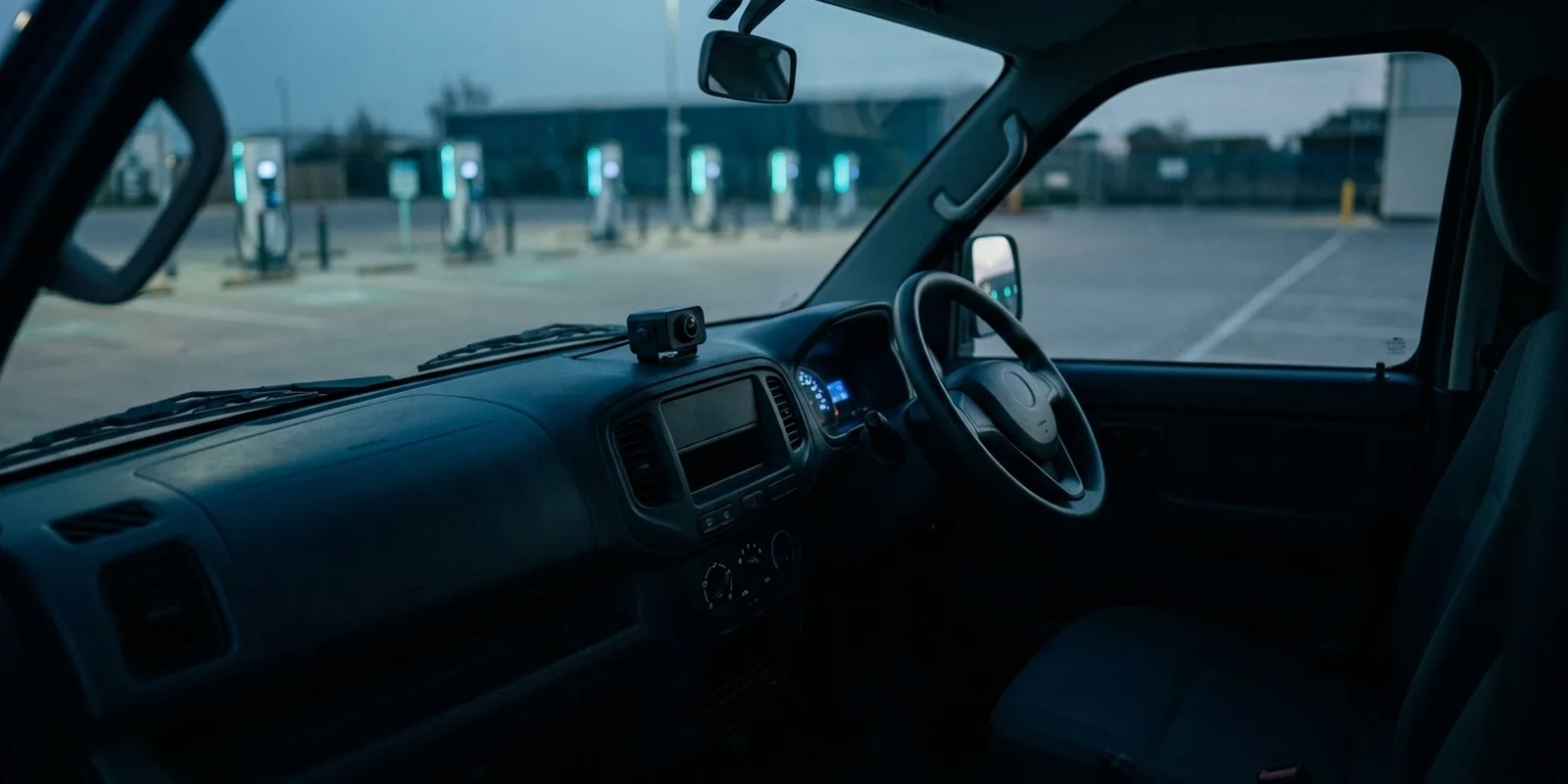
Two different data streams get sold under the same safety label. A camera-based driver monitoring system watches the person: eyelid closure and blink length, head pose and gaze away from the road, a phone in hand, an unbuckled belt, a covered lens. Vehicle telematics watches the machine: speed against the limit, harsh braking, harsh acceleration, sharp cornering, idling and location. The two overlap far less than sales decks suggest, and most fleets that buy the camera already own the second stream.
Signal
Where it comes from
What it tells you
Drowsiness (eye closure, yawning)
In-cab camera
Fatigue building, often before any driving error shows
Distraction (gaze off road, phone in hand)
In-cab camera
An attention lapse at the moment it happens
Over-speeding
Telematics GPS
Speed against the limit, road by road
Harsh braking, acceleration, cornering
Telematics accelerometer, EV drivetrain
Driving style and near-miss proxies
Energy per km (Wh/km)
EV drivetrain and battery management system
Smoothness, payload and route effects, with no diesel equivalent
In-cab signals need a camera. Vehicle signals are already in an EV’s data feed.
The vehicle side matters more than its lack of glamour suggests. MoRTH’s Road Accidents in India 2023 report attributes 68.1% of that year’s 1,72,890 road deaths to over-speeding, a behaviour your GPS trace already records without a lens pointed at anyone. An EV adds more for free. Its drivetrain reports motor torque, regenerative current, state of charge and energy drawn, so acceleration and braking style can be read from the vehicle itself rather than guessed by a box on the windscreen. What to demand from that feed is covered in our guide to EV fleet telematics.
The factory drowsiness warning is not a camera
India’s type-approval standard for the factory feature, AIS-184 (May 2023), defines driver drowsiness and attention warning (DDAW) as a system that judges alertness “through vehicle systems analysis”, such as steering and lane-keeping patterns, and requires it to work without biometric data or facial recognition. It switches on only above 60 km/h for buses and trucks, leaves intra-city and school buses out of scope, and exempts N1 light goods vehicles entirely, which covers most of the last-mile van market.
A March 2025 draft amendment to the Central Motor Vehicles Rules, G.S.R. 184(E), proposed a new rule on advanced driver assistance systems. No general fitment mandate had been confirmed from PIB or BIS at the time of writing (October 2026), so check your OEM’s type-approval documents. For an urban fleet the camera stays an optional purchase, and it has to earn its place. Location trackers and panic buttons on permit vehicles are a separate obligation, covered in our AIS 140 guide.
The Intervention Loop That Makes A Driver Monitoring System Pay Off
Detection is cheap; attention is not. Take 100 taxis in Bengaluru running two shifts a day. If each vehicle raises four camera alerts per shift, a plausible rate once phone and gaze rules are switched on, the control room receives 800 events a day. At two minutes of review each, that is almost 27 hours of work for a team that may have two people on it. Left unreviewed, alerts become noise, and drivers learn within a week that nothing happens. (These figures are illustrative; run the same sum on your own fleet’s first month.)
The fix is triage, written down before the cameras go live:
Tier
Example
Who acts
Within
Critical
Eyes closed for seconds at speed; repeated fatigue alerts in one shift
Shift supervisor calls the driver; vehicle stopped or swapped
5 minutes
High
Phone in hand while moving; repeated harsh braking on one route
Supervisor reviews the clip
Same shift
Coaching
A single gaze-off or harsh event
Batched into the driver’s weekly review
Weekly
Noise
Sunglasses false positive, depot manoeuvre
Auto-closed and used to retune thresholds
Monthly audit
A four-tier triage for in-cab and vehicle alerts. Response times are starting points to adjust per fleet.
Two rules keep the loop honest. First, every tier has a named owner on every shift, not a shared inbox. That is the same severity-graded, escalation-routed discipline YoMobility applies to fleet alerts on charging, payments and invoices. Second, every alert closes with a recorded outcome: called, coached, or dismissed as false. A month of outcomes shows which rules generate work and which generate safety. What to do once something has actually gone wrong belongs in your exception-handling playbook.
A coaching score is not a pay score
In practice, teams that see lasting improvement keep coaching short and regular: about ten minutes a week per driver, built on two or three clips, with the driver given the chance to explain the context first. The scorecard behind it should be normalised per 100 km and by route, so a driver on a congested Silk Board run is not ranked against one on an empty ring road. Once that score feeds pay deductions, it stops being a coaching tool. Drivers cover lenses, dispute every clip, and arguments about false positives eat the review time. If you reward performance through the driver mobile app and commission rules, reward improvement and clean weeks, and keep camera events out of the deduction column.
Why A Diesel Scorecard Mis-Ranks EV Drivers
Port a diesel fleet’s scoring rules onto electric vehicles unchanged and the ranking quietly inverts. Three things move.
Regenerative braking changes what harsh braking means
On an EV, much of the everyday slowing happens through the motor, not the brake pads. A driver who lifts off early and lets regeneration do the work is driving well: anticipating traffic and recovering energy. Yet a strong regen setting can decelerate the vehicle hard enough for an accelerometer-only rule to log it as braking, and a diesel-era threshold cannot tell that from a late stab at the pedal. The drivetrain can. Split each stop into regenerative and friction braking, then score late friction stops rather than deceleration as such.
Instant torque inflates harsh acceleration
Electric motors deliver full torque from standstill, so an ordinary pull-away at a signal can cross an acceleration threshold set for a diesel van. Recalibrate on your own fleet’s first month of data before any score counts.
Range anxiety creates its own patterns
A low state of charge changes behaviour in both directions. Some drivers crawl and switch off the air-conditioning to stretch range; others speed to reach a charger before the pack runs down. If harsh or speeding events cluster below 20% charge, the fix lies in charging and route planning, not in coaching the driver.
Energy per km is the score a diesel fleet never had. On the same route and payload, a spread of 165 to 195 Wh/km between two drivers is an 18% energy gap that comes down largely to driving style, measured without a camera (illustrative figures). Using it needs drivetrain data joined to who was driving which vehicle on which shift, the driver–vehicle association that YoMobility’s fleet management platform keeps as standard.
Running A Driver Monitoring System Lawfully, Without Losing Your Drivers
In-cab video of an identifiable driver is personal data under the Digital Personal Data Protection Act, 2023, and your company, not the camera supplier, answers for it. Notice, purpose and retention duties are set out in our DPDP guide; what matters here is how they shape the deployment.
The regulator’s own standard sets a useful benchmark. AIS-184 requires the factory drowsiness warning to work without facial recognition and to keep only the data it needs, in a closed loop where stored data is overwritten. An aftermarket camera that records a driver’s face for the whole shift is a much heavier design choice, and you will have to justify it. In practice, that means:
One written purpose per signal. Fatigue and distraction alerts are for safety, not attendance checks or trawling old footage for discipline cases.
Event clips, not full shifts. Keep a short clip around each alert, overwrite the rest on a rolling cycle, and set a retention period you can defend.
A short access list with a log. Supervisors see their own drivers’ clips; nobody browses.
Drivers see what you see. Show them their own clips and score before any coaching conversation.
Lens off when off duty. No recording during breaks or once the vehicle is switched off at shift end.
Fleets that explain the rules up front, show drivers their own data and use it to coach rather than to fine tend to find the cameras stay uncovered. That trust is what every number above depends on.
Frequently Asked Questions
An in-cab camera and software that watch the driver for drowsiness, distraction and phone use and raise an alert. In a fleet it is usually paired with telematics, which covers speed, braking and acceleration.
No general fitment mandate had been confirmed from PIB or BIS as of October 2026. AIS-184 sets the standard for the factory drowsiness warning, and a March 2025 draft rule proposed ADAS fitment, so check your OEM’s type-approval documents.
Not for speeding and harsh driving, which telematics and an EV’s drivetrain already record. A camera adds in-cab signals such as fatigue, gaze and phone use, which matter most on long shifts and night driving.
Grade them by severity, give each tier a named owner and a response time, record an outcome for every alert, and batch the minor ones into weekly coaching.
Keep them separate. Scores tied to deductions get gamed and disputed, while scores used for coaching tend to improve. Reward improvement instead, and check purpose limits under the DPDP Act.
Set your own alert thresholds, route each alert to a named owner with escalation, and see driver performance next to charging and invoices in one dashboard. We can map it to your fleet in one call.
What happens next ?
Review of your current alerts, telematics feed and shift pattern
Alert triage and escalation plan for your control room
Driver scorecard tuned to EV drivetrain data
Rollout support for alerts, the driver app and reporting