Mixed Fuel EV Fleet Operations: The Tactical Playbook For Corporate Transport Teams
By Shaurya Rathore8 min read
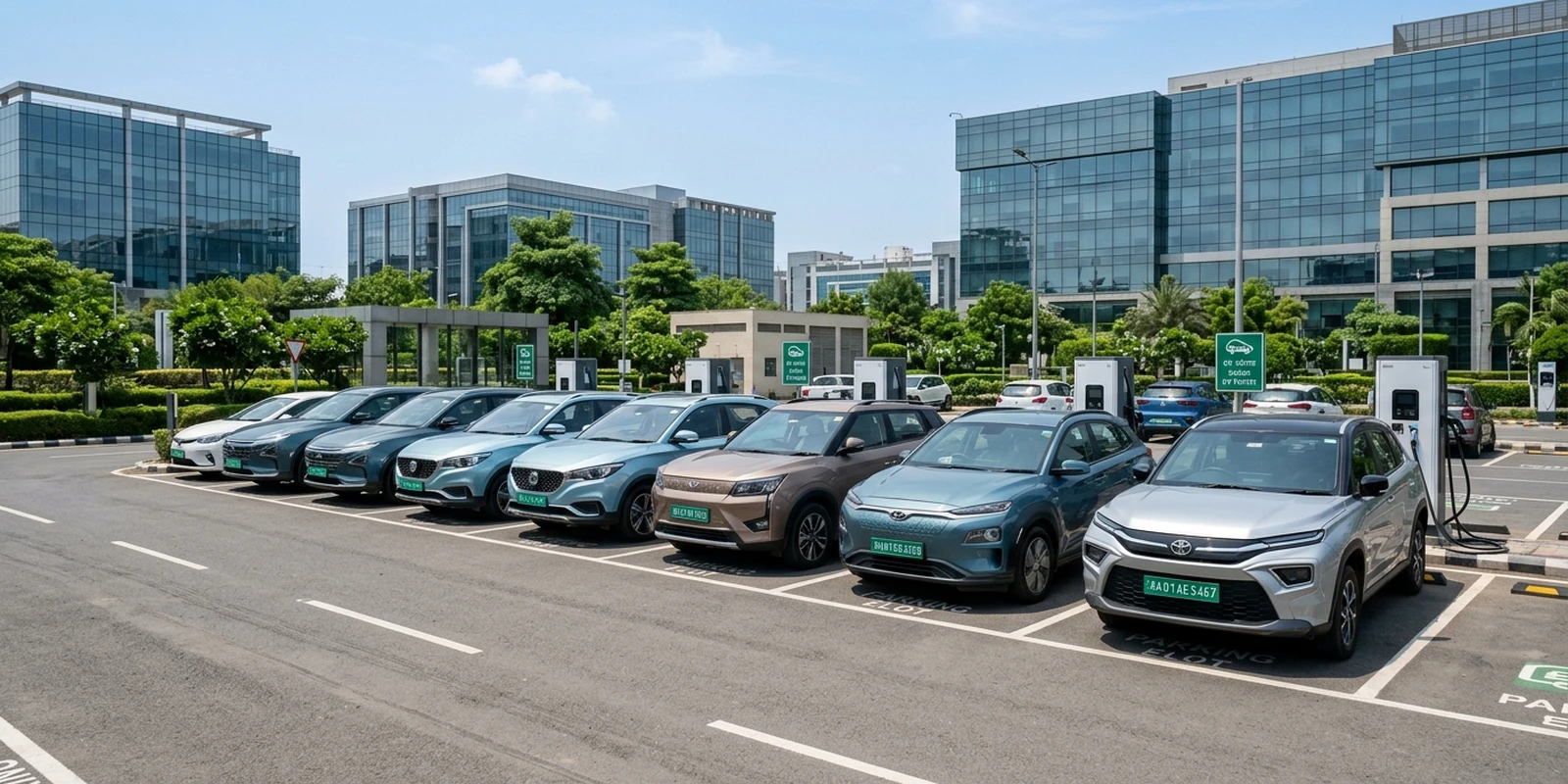
Mixed Fuel EV Fleet Operations: The Tactical Playbook
💡 Mixed Fuel EV Fleet Operations: Key Highlights
- Match vehicle to route, not route to fleet — assign by range and depot return window, not by which vehicle is parked closest to the gate.
- A Tata Nexon EV’s Long Range 45kWh pack covers ~489km ARAI-rated; the Medium Range 30kWh pack covers ~275km — the gap between the two is exactly where dispatch mistakes happen in mixed fleets.
- India’s public charging network runs at roughly one charger per 212 EVs nationally — a mixed corporate fleet cannot depend on public charging and must anchor its EV routes to depot charging.
- Around 70% of fleet charging events happen overnight at the depot; only the remaining share needs public or fast charging at all.
- Fleet managers who track cost-per-km, charger utilization, and trip completion by powertrain separately catch problems 2-3 weeks before they show up in the fuel/energy budget line.
- A single operating layer across vehicles, chargers and payments turns a two-fleet reporting headache into one dashboard.
Most corporate transport heads don’t get a clean switch from diesel to electric — they get a mixed fuel EV fleet operations problem instead. A dozen EVs arrive, the other forty vehicles stay ICE for another two or three years, and the same dispatcher who used to hand out routes by seniority now has to think about state of charge, charger queues, and two completely different cost structures on the same spreadsheet. This is a tactical problem, not a strategic one — the “why electrify” case is settled (see our companion piece on the strategic edge of going electric for mixed corporate fleets); this article is about how you actually run the mixed fleet on a Tuesday morning without the wheels coming off. Below is the operating logic — dispatch rules, charger allocation, exception handling, and the reporting layer — that separates fleets where EVs quietly displace diesel from fleets where the EVs become an operational thorn everyone quietly avoids using.
The Core Rule: Match Vehicle To Route, Not Route To Fleet
The single biggest mistake in mixed fuel EV fleet operations is dispatching by habit — same driver, same vehicle, same route every day, powertrain be damned. It works until the day an EV assigned to a 220km round trip returns with 8% state of charge and a driver who took the highway shoulder at 40kmph to make it back. The fix is a range-appropriate assignment rule, applied every morning, not once at fleet setup.
Range-appropriate assignment, in practice
Route your highest-mileage, return-to-base runs to EVs first — a Long Range EV like the Nexon EV’s 45kWh variant, ARAI-rated near 489km, comfortably covers a 150-200km daily loop with charge to spare; the shorter-range 30kWh variant (~275km) suits inner-city loops under 100km. Send genuinely unpredictable trips — last-minute long hauls, multi-city runs, routes with uncertain charger access — to ICE vehicles until you’ve built confidence and charging density on that corridor. This isn’t a permanent split; it’s a rolling rule that shifts as more of the network gets EV-ready.
A simple decision matrix for dispatchers
Give dispatchers three inputs, not ten: today’s route distance, current state of charge on available EVs, and whether the destination has a charger. If all three clear, assign the EV. If any one fails, default to ICE — never gamble a corporate booking on a marginal charge estimate. A fleet operating system like YoMobility can enforce this automatically, surfacing live SOC and route feasibility so the decision takes seconds instead of a phone call to the depot.
Charger Allocation When EVs And ICE Vehicles Share A Depot
India’s public charging infrastructure is still thin relative to the EV parc — industry estimates put it at roughly one public charger for every 212 electric vehicles on the road nationally. A mixed corporate fleet that leans on public charging for daily operations is building on sand. The workable model, and the one most fleet electrification research from RMI and ICCT converges on, is depot-anchored charging: the bulk of energy goes into vehicles overnight at the depot, with public or fast charging reserved for genuine exceptions.
Overnight AC charging for the return-to-base majority
If a vehicle is back at the depot for 8+ hours overnight — true for most employee transport and corporate shuttle routes — standard AC charging is enough and far cheaper to install than fast charging. A 7.2kW AC unit takes a Nexon EV from empty to full in roughly 4-6 hours depending on pack size, which comfortably fits an overnight window with margin for delays. Size your AC charger count to your overnight EV population, not your total fleet.
Reserving DC fast charging for the exceptions, not the routine
Keep one or two DC fast chargers for same-day turnarounds, emergency top-ups, or EVs pulled into an unplanned second shift — not as the default charging method. Fast chargers cost several times more per unit than AC and add demand-charge risk if too many vehicles queue for them at once. Log every charging session against the vehicle and route it served; a charging management layer that tracks session data automatically is what lets you catch a charger being monopolized by one route before it becomes a pattern.
Building The Daily Dispatch Board For Mixed Fuel EV Fleet Operations
A mixed fuel EV fleet operations dispatch board needs one more column than a pure-ICE board: state of charge. Everything else — driver assignment, route, shift timing — stays the same. The discipline is in checking that column before the vehicle leaves the yard, every single day, not just when someone remembers.
What the morning board should show
For each vehicle: powertrain, current SOC or fuel level, assigned route and distance, and a go/no-go flag computed from the decision matrix above. Supervisors shouldn’t need to mentally convert battery percentage to kilometers — the board should already show “route feasible: yes/no” so the morning huddle takes five minutes, not thirty. Vehicle-level visibility like this is exactly what a vehicle management dashboard is for — one screen for both fuel types instead of a diesel logbook and a separate EV app.
Handling exceptions without derailing the day
Three exceptions recur in mixed fleets: an EV that didn’t charge fully overnight (charger fault or a driver plugged in late), a charger outage that strands a route assignment, and a route that runs longer than planned mid-day. The fix for all three is the same — a fallback ICE vehicle held in reserve, not committed to a route, until the morning board confirms every EV is genuinely trip-ready. Fleets that skip this buffer are the ones where one bad charging night turns into a missed pickup and an angry email to the transport head.
Reporting Mixed Fleet Performance To Management
Management doesn’t want a diesel report and a separate EV report — they want one number: is the fleet cheaper and more reliable than it was last quarter, and is the electrification plan on track. That means every KPI has to be split by powertrain and rolled up into one view.
The four numbers that matter
Cost per kilometer by powertrain (energy plus maintenance for EVs, fuel plus maintenance for ICE), charger utilization rate, trip completion rate split by powertrain, and CO₂ avoided from the EV share of the fleet. These four, tracked weekly, catch a stalling electrification plan long before the annual sustainability report does — a route that “always” goes to ICE because “the EV can’t handle it” should show up as a flagged pattern, not an assumption nobody re-checks.
Turning the data into a monthly scorecard
Bring the same four metrics to a monthly review, plotted against the prior month, and use it to decide which ICE vehicle gets replaced next — not by mileage on the odometer but by whichever route it’s stuck on for lack of charging confidence. A payment management layer that reconciles fuel cards and charging invoices into the same ledger removes the single biggest reason this reporting slips: finance teams manually stitching together two billing systems every month.
None of this requires new headcount — it requires one operating system that already knows which vehicle is which powertrain, where it is, how much charge or fuel it has, and what it cost to run. That’s the entire case for running mixed fuel EV fleet operations off a single platform rather than a diesel process bolted onto an EV app: fewer handoffs, fewer spreadsheets, and a dispatch board that tells the truth every morning instead of once a quarter.
Frequently Asked Questions
What’s the biggest operational risk in mixed ICE and EV corporate fleets?
Treating EVs and ICE vehicles as interchangeable at dispatch time. The fix is a simple range-and-charger-availability check before every EV assignment, with an ICE vehicle held in reserve as a fallback.
Do mixed fleets need DC fast chargers at the depot?
Usually only one or two, for exceptions. Most corporate transport EVs return to base with 8+ hours before the next shift, which standard AC charging covers comfortably and far more cheaply than fast charging.
How many KPIs should a mixed fleet track?
Four, tracked by powertrain: cost per km, charger utilization, trip completion rate, and CO₂ avoided. More than that dilutes the monthly review; fewer and you miss early warning signs of a stalling transition.
Can one platform manage both diesel and electric vehicles?
Yes — an EV fleet management platform like YoMobility is built to sit across both, tracking vehicles, chargers, energy consumption and payments for fuel and electricity in one dashboard rather than running a separate diesel process alongside an EV app.
Sources: RMI — Electric Vehicle Charging Infrastructure | ICCT — Charging Infrastructure Needed For India’s EV Transition | Tata Nexon EV specifications, Wikipedia
Manage Your Mixed EV + ICE Fleet Today
One dashboard for vehicles, chargers, energy and payments — whatever the powertrain. See how YoMobility runs mixed fuel EV fleet operations without adding headcount.
YoMobility EV-FMS
EV fleet management softwareRun every vehicle, driver, charge and payment from one platform. Charge on multiple networks, and get one invoice for all of it.
Resources
Keep reading
Driver Monitoring System For EV Fleets: What The Camera Sees And What It Should Change
💡 Driver Monitoring System: Summary A driver monitoring system is usually bought as a camera and judged on detection: does […]

EV Battery Replacement Cost For Fleets: What Drives The Quote — And When Replacing Is The Wrong Call
💡 EV Battery Replacement Cost: Key Highlights The EV battery replacement cost is the largest single repair bill a fleet […]

Electric Scooter For Delivery Fleets: Specs That Survive A Full Rider Shift
💡 Electric Scooter For Delivery Fleets: Summary An electric scooter for delivery and an electric scooter for commuting are usually […]
See YoMobility on your fleet
Tell us how many vehicles you run and where they charge. We'll show you how they'd run on one platform, with one invoice.
Or contact us