
How Ecosine Runs a Luxury Electric Fleet in Dubai on YoMobility
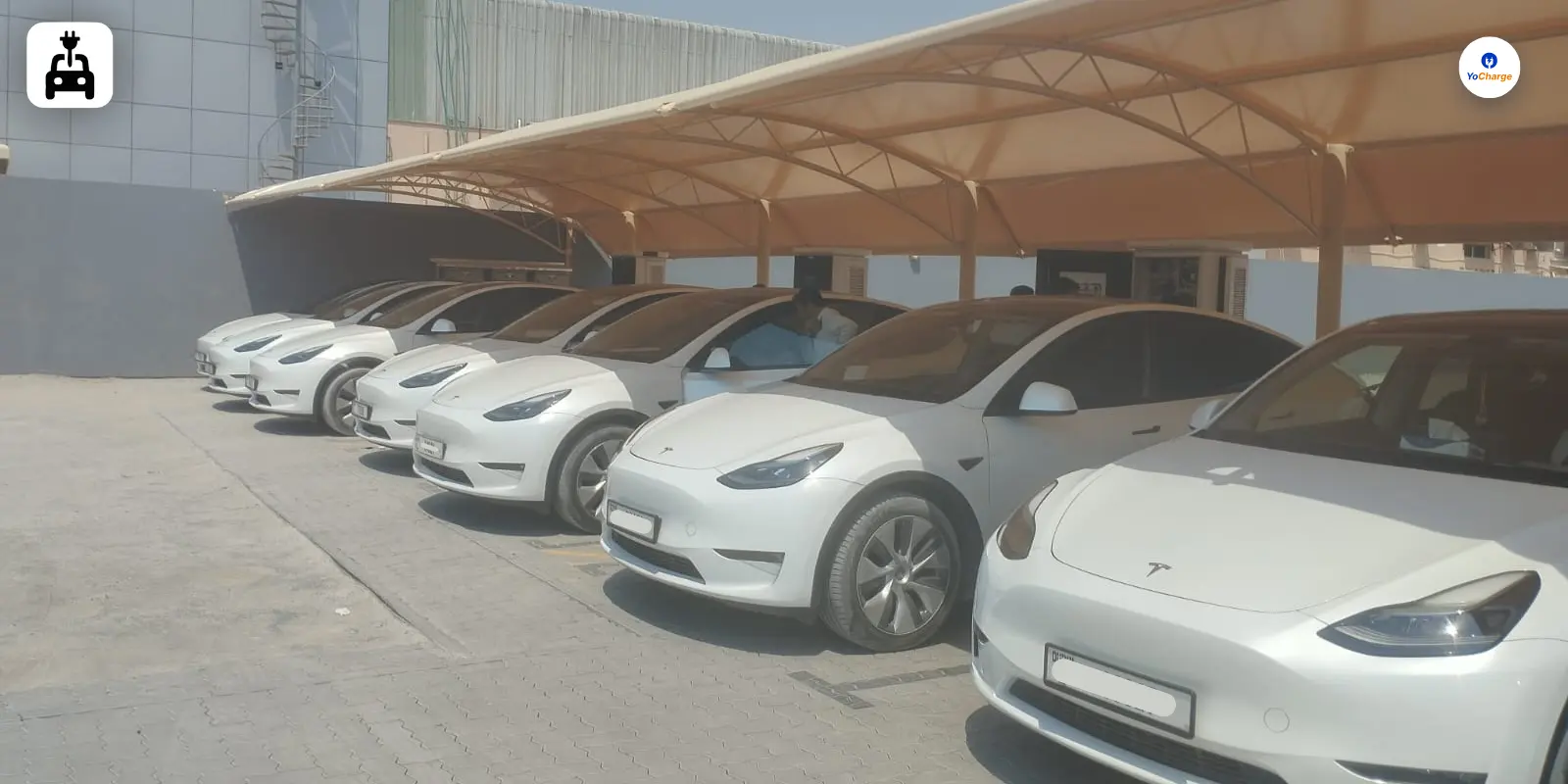
Ecosine Transports runs more than 150 electric vehicles, including Tesla and BYD, as the exclusive transport provider for seven luxury hotels in Dubai. Charging, vehicles, drivers and payments all run on YoMobility.
- Company
- Ecosine Transports LLC, luxury transport, Dubai
- Founded
- 2021
- Fleet
- 150+ electric vehicles, including Tesla and BYD
- Clients
- Seven luxury hotels, including Le Meridien Dubai Hotel and Conference Centre
- On YoMobility
- Charging, vehicle, driver and payment management
- 92%
Fleet utilisation, up from 75%
- 98%
Charging session success, up from 65%
- 96%
Vehicle uptime, up from 88%
Results as stated in this case study. Every before-and-after figure
About Ecosine
Ecosine Transports LLC was founded in 2021 to offer luxury transport in Dubai on electric vehicles only. Its fleet of more than 150 electric vehicles, including Tesla and BYD models, is the exclusive transport provider for seven luxury hotels in Dubai, including Le Meridien Dubai Hotel and Conference Centre.Ecosine has its own charging infrastructure. It is led by Managing Director Salman Omar, named in the “40 Under 40” list in Bangladesh, and has connections with Fujairah’s leadership.
Premium service, electric vehicles
In luxury transport, a vehicle that isn’t charged in time is a missed booking. Fleet software built for petrol and diesel vehicles couldn’t handle what changed:
Charging around bookings. A DC fast charge takes 20 to 30 minutes, not the few minutes of a fuel stop. Every charge had to fit around vehicle availability and routes.
Battery health. Each vehicle’s state of charge, state of health and battery temperature needed constant watching. Otherwise batteries wear early and replacements cost more.
Range and routes. Route plans had to allow for range: elevation, payload, weather and regenerative braking. Ordinary GPS tools don’t account for these.
Driving and charging habits. Electric vehicles drive differently. Drivers needed training to drive efficiently and charge correctly.
What Ecosine runs on YoMobility
YoMobility was built for electric fleets from the start, not adapted from software for petrol and diesel vehicles. Ecosine uses four of its modules.
-
Charging management
- Charging schedules set by vehicle use, electricity tariffs and operations.
- Live battery monitoring: state of charge, state of health and temperature, with alerts for any vehicle at risk of running low.
- Depot load balancing: when several vehicles charge at once, the available power is shared by each vehicle’s need and departure time.
-
Vehicle management
- Predictive maintenance from each vehicle’s history, so faults are fixed before they cause a breakdown.
- Live vehicle view: location, battery, charging progress and health on one dashboard, with instant alerts.
- Route planning that allows for energy use, charging station locations, traffic and driver schedules.
-
Driver management
- Driver performance: acceleration, regenerative braking, energy use and idle time, for targeted coaching.
- EV training modules on efficient driving, charging procedures and emergency protocols.
-
Payment management
- Automatic reconciliation and wallets, connected to Ecosine’s accounting, including distance-based, time-based and premium-service pricing.
- Live cost tracking: energy, maintenance and operating costs per vehicle and per route.
- Driver limits: drivers and fleet managers both see charging use and wallet limits as they happen.
How the rollout was run
Before launch, the Ecosine and YoMobility teams planned the rollout in detail: the resources, the implementation plan and the driver SOP for charging. It then ran in three phases.
-
Phase 1
Fleet analysis and planning
- Charging audit: Ecosine’s charging infrastructure was checked for capacity limits, with advice on where to add charging points and how to charge smartly.
- Vehicle use: telematics data showed peak demand and under-used vehicles.
- Driver baseline: energy efficiency, customer service and safety were measured first, to train against.
-
Phase 2
Integration
- Little new hardware: YoMobility used the existing telematics devices and vehicle systems, from the cloud.
- Connected systems: APIs link the platform to Ecosine’s booking, customer management and financial reporting systems, so operations kept running during the switch.
-
Phase 3
Training
- Fleet managers: the dashboard, analytics and reports.
- Every driver: EV driving technique, charging procedures and customer service.
- Customer service staff: what the new platform lets them tell customers.
Before and after YoMobility
The figures recorded for Ecosine’s fleet in this case study, first published in August 2025.
Operations
- Fleet utilisation75% to 92%22.7% higher
- Charging session success65% to 98%50.8% higher
- Vehicle uptime88% to 96%9.1% higher
- Driver efficiency score70% to 89%27.1% higher
Service
- Customer satisfaction (out of 10)8.2 to 9.414.6% higher
- Payment processing accuracy92% to 99.5%Billing disputes virtually eliminated
Running cost per vehicle
- Maintenance cost per monthAED 1,200 to AED 75037.5% lower
- Energy use per 100 km25 kWh to 18 kWh28% lower
- 35%
Better route efficiency, for more predictable arrival times
- 2,400 kg
Of CO2 emissions avoided every month
Why it worked
Ecosine didn’t treat electric vehicles as a straight swap. It planned the rollout, trained every driver and ran the fleet on data.
- Leadership
Managing Director Salman Omar backed the change from the top, which kept the whole company aligned.
- Built for electric
A platform designed for electric fleets, not a petrol-era system with EV features added.
- Training for everyone
Managers, drivers and customer service staff were all trained, so the platform was used fully.
- Decisions on data
Performance was tracked continuously, so the fleet kept improving after launch.
See how YoMobility would run your fleet
Whether you run premium transport, last-mile delivery or corporate shuttles, YoMobility puts charging, vehicles, drivers and payments in one platform.