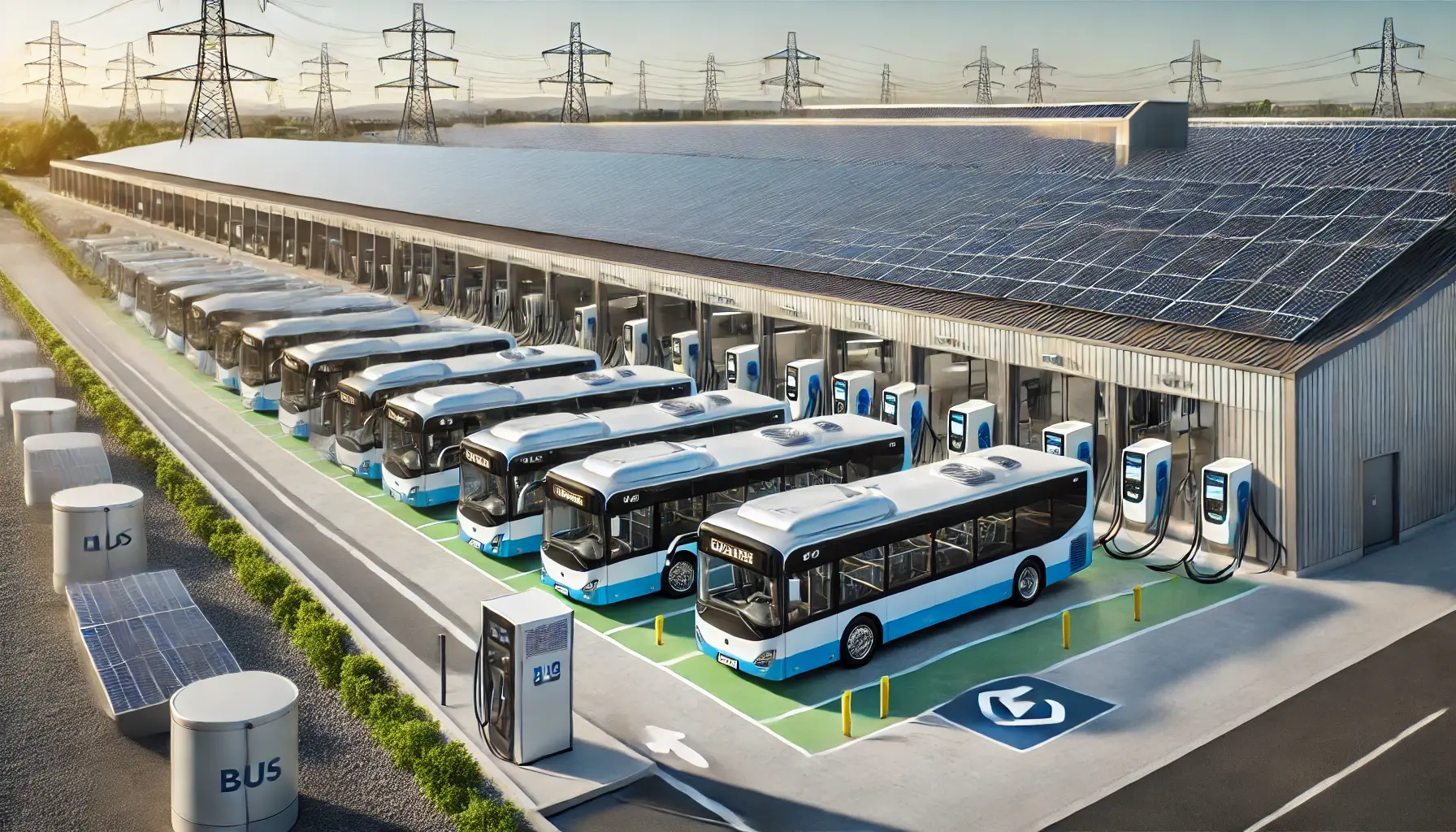
💡 Best Electric Buses for Fleet Operators: Key Highlights
- India had 8,000+ electric buses deployed by 2025, with government targets of 50,000 by 2030 under PM e-DRIVE
- Olectra, Tata Motors, JBM, and PMI Electro together account for over 85% of India’s deployed e-bus fleet
- Operating cost advantage: electric buses save ₹18–25 per km vs diesel in urban STU operations
- School, corporate, and intercity operators face different range, charging depot, and fleet management requirements
- Multi-depot bus fleets need a unified charging management platform to avoid fragmented CPO billing and session failures
For fleet operators running school buses, corporate employee transport, or intercity routes, the shift to electric buses in India is no longer experimental — it is a procurement reality backed by central subsidies, mature domestic manufacturers, and a fast-growing charging network. The challenge for fleet managers is choosing the right bus for the right operation, and then managing the charging infrastructure that makes the fleet actually work at scale.
This guide evaluates the best electric buses for fleet operators in India in 2026 across four categories: school buses, corporate employee transport, intercity coaches, and city transit. Every model is assessed on range, charging compatibility, seating, depot infrastructure requirements, and YoMobility fleet management integration.
What Fleet Operators Need to Evaluate in an Electric Bus
Unlike consumer EV purchases, fleet bus procurement requires matching the vehicle to a specific operational profile. Before comparing models, define your requirements:
- Route length and daily distance: Single-shift urban routes (80–120 km) vs multi-shift intercity operations (200–300 km daily) require fundamentally different battery capacity
- Depot charging infrastructure: Do you have AC overnight charging or DC fast-charge capability? Overnight charging suits school/corporate fleets; depot fast-charging suits STU/intercity operations
- Seating and passenger comfort: School buses prioritise safety features and seat count; corporate transport prioritises comfort and AC efficiency; intercity needs luggage capacity
- Fleet management software support: Can the bus integrate live SOC, GPS, and driver data with your fleet management platform?
Best Electric Buses for School Fleets
Tata Starbus EV (12-metre)
Seating: 35–40 | Range: 150–200 km | Charging: AC overnight + DC fast charge | Key feature: ICV-grade body with enhanced safety systems
The Tata Starbus EV is the most deployed electric bus in India’s school and institutional segment. It benefits from Tata’s established school bus sales network and after-sales support — critical for operators who cannot absorb downtime. The 150–200 km range covers double-shift school operations (AM and PM routes) on a single overnight charge at most depot locations. YoMobility’s driver management module tracks driver shift start/end times and route completion against vehicle SOC — enabling predictive charging scheduling for the next morning’s run.
JBM EcoLife Electric
Seating: 32–40 | Range: 200 km | Charging: AC depot charging | Key feature: Lower floor design, wide doors for faster boarding
JBM’s EcoLife brings a slightly longer range and a more modern interior compared to legacy school bus conversions. It is well suited for operators running mixed school and corporate transport from the same depot, as the seating can be configured for either use case.
Best Electric Buses for Corporate Employee Transport
Olectra C9 (9-metre)
Seating: 31 | Range: 250 km | Charging: DC fast charge (1 hr to 80%) | Key feature: Premium interior, individually reclining seats, USB charging at every seat
The Olectra C9 has become the default choice for IT park operators and large corporate campuses in Pune, Bangalore, and Hyderabad running employee shuttle services. The 250 km real-world range comfortably covers multi-shift corporate routes — including late-night IT shift drops — with a single DC fast charge between shifts. Olectra’s service presence in tech hub cities is a significant operational advantage.
Tata Starbus Ultra EV (12-metre)
Seating: 45–52 | Range: 200–250 km | Charging: AC + DC | Key feature: High seating capacity for large campus shuttles
For corporate operators needing maximum passenger throughput per trip — manufacturing plant shifts, SEZ shuttles, large campus operations — the Starbus Ultra EV offers the highest seating capacity in the electric bus segment. Lower per-seat operating cost makes it the economic choice for high-frequency route operations.
Best Electric Buses for Intercity and State Transport
BYD K9 (12-metre)
Seating: 31–41 | Range: 250–300 km | Charging: DC fast charge (2 hrs to full) | Key feature: Highest certified range in India’s e-bus segment
The BYD K9 is the highest-range electric bus commercially available in India and the benchmark for state transport undertakings evaluating intercity electrification. It is deployed with BEST Mumbai, DIMTS Delhi, and KSRTC Karnataka. For private intercity operators, the K9’s range comfortably covers routes up to 250 km without intermediate charging — the critical threshold for most North-South and East-West state highway corridors.
PMI Electro Buses
Range: 200–300 km | Key feature: Gross Contract Model (GCM) — FAME-approved, used in city bus tenders across multiple states
PMI Electro has won significant STU tenders in Gujarat, Rajasthan, and Andhra Pradesh. For private operators who want to align with state government procurement standards (and potentially benefit from state subsidy frameworks), PMI’s FAME-approved buses are the lower-risk procurement option.
Managing Charging for Multi-Bus Fleets
The operational complexity of electric bus fleets scales with the number of buses and depots. A single school with 5 buses charging overnight on depot AC chargers is straightforward. A corporate transport operator running 50 buses across 3 depots with mixed CPO networks faces a fundamentally different challenge.
✅ With YoMobility Fleet Management
- Single dashboard for all buses across all depots
- Live SOC for every bus — know which is ready for next shift
- Charging scheduled automatically based on next route departure
- One consolidated invoice for all CPO networks
❌ Without Fleet Management Software
- Separate apps per CPO — drivers managing 5–10 accounts
- No visibility on which bus is charged and ready
- Charging happens on ad-hoc driver discretion, not shift schedule
- Multiple CPO invoices — billing reconciliation nightmare
YoMobility’s fleet charging management platform connects bus fleets to India’s 9+ major CPO networks, enabling fleet managers to monitor, schedule, and control every charging session from a single interface — regardless of which network or depot the bus is at.
Sources: Ministry of Heavy Industries — PM e-DRIVE | Olectra Greentech | Tata Motors Buses
Manage Your Electric Bus Fleet from One Platform
From school bus routes to corporate shuttles and intercity coaches — YoMobility manages charging, drivers, vehicles and payments for every type of bus fleet in India.
YoMobility EV-FMS
EV fleet management softwareRun every vehicle, driver, charge and payment from one platform. Charge on multiple networks, and get one invoice for all of it.
Resources
Keep reading
Electric Scooter For Delivery Fleets: Specs That Survive A Full Rider Shift
💡 Electric Scooter For Delivery Fleets: Summary An electric scooter for delivery and an electric scooter for commuting are usually […]
PM E-DRIVE Scheme In 2026: What Fleets Can Still Claim And What Already Closed
💡 PM E-DRIVE Scheme: Key Highlights If you are timing an electric vehicle purchase for a commercial fleet, the PM […]
CNG vs EV For Commercial Vehicles: The Comparison Indian Fleets Actually Face
💡 CNG vs EV For Fleets: Key Highlights This is for one reader: the fleet owner replacing a diesel light […]
See YoMobility on your fleet
Tell us how many vehicles you run and where they charge. We'll show you how they'd run on one platform, with one invoice.
Or contact us