Daily Playbook For Electric Last-Mile Fleet Managers
YBy YoMobility Team8 min read
Daily Playbook For Electric Last-Mile Fleet Managers
💡 EV Last Mile Fleet Operations Checklist: Key Highlights
Start every shift with a SOC check — flag any van below 70% state of charge for a pre-shift top-up before routes are assigned.
Match route length to realistic range, not rated range — most electric cargo 3-wheelers deliver 100-150 km of usable daily range with cargo and traffic.
Build a 20-30 minute charge window between delivery waves instead of waiting for SOC to drop below 20%.
Real-time SOC and location visibility cuts the time dispatchers spend chasing driver status calls.
A documented exception playbook — charger outage, no-show, range risk — keeps SLAs intact when something goes wrong mid-shift.
An AI-powered OS like YoMobility surfaces SOC, charging status and driver payments on one screen so supervisors run the day without switching apps.
Running a fleet of electric vans or cargo three-wheelers for last-mile delivery looks nothing like running an ICE fleet on paper — and most of the difference shows up in the first two hours of the day. An EV last mile fleet operations checklist gives supervisors a repeatable way to plan shifts, assign routes within realistic battery range, and build charge windows into the schedule before vehicles ever leave the depot. For a 50-van fleet operating out of a single depot in Bengaluru or Delhi, the gap between hitting 95%+ SLA and scrambling through missed drops usually comes down to whether this playbook exists — and whether supervisors have real-time visibility into state of charge, charger status and driver payments instead of relying on phone calls and spreadsheets.
Morning Shift Planning And Vehicle Readiness Checks
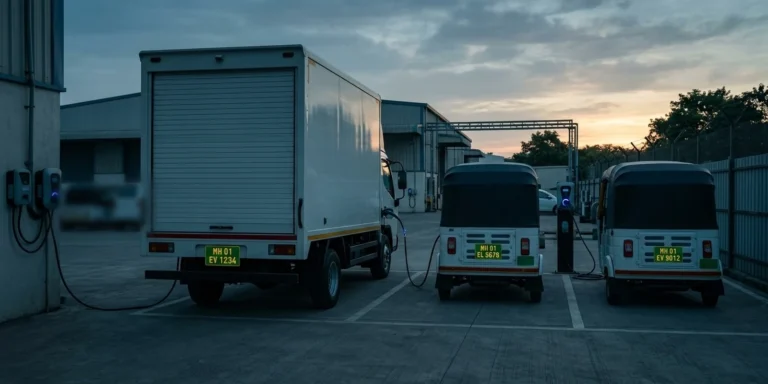
Before assigning a single route, the depot supervisor needs three numbers for every vehicle: state of charge (SOC), any battery-health or maintenance flag, and driver attendance. For most electric cargo 3-wheelers and vans used in Indian last-mile fleets — Tata Ace EV, Euler Motors HiLoad EV, Piaggio Ape Electrik — a full overnight AC charge should put SOC at 95-100% by a 6-7am shift start. Any vehicle below roughly 70% SOC at shift start should either get a short top-up window before dispatch or be rotated onto a shorter, inner-zone route rather than sent out on a full outer-zone loop.
In practice, teams usually run this as a 15-minute pre-shift huddle:
Pull overnight SOC data for every vehicle before assigning routes
Flag vehicles below the SOC threshold for a pre-shift top-up
Confirm driver attendance and lock the driver-to-vehicle assignment for the day
Note any vehicle on a maintenance hold and reassign its planned route before the shift starts
An AI operating system like YoMobility’s EV vehicle tracking pulls SOC, odometer and maintenance-flag data automatically, so this huddle takes minutes instead of a supervisor calling each driver individually.
Route Assignment: Matching Vans To Delivery Zones
Rated range on a spec sheet and usable daily range are two different numbers. A vehicle like the Euler Motors HiLoad EV is rated for close to 200 km, but with cargo load, stop-and-go traffic and AC use, a realistic operating range for a delivery loop is closer to 100-150 km. Most last-mile vans in dense Indian metros only need 60-100 km of driving across several short delivery loops in a shift — well within range — but the assignment logic still matters: don’t send a van sitting at 65% SOC on a 90 km outer-zone route when a fully charged van is available for the same loop.
If your delivery density is high but individual routes are short — think dense inner-city zones for quick-commerce — prioritise overnight depot AC charging and keep those vans on tight loops. If routes are longer and sparser — outer suburbs, industrial parks — reserve your highest-SOC vehicles for those assignments each morning and build in a mid-route charge stop as a matter of course, not an exception.
Charge-Window Planning To Avoid Midday Downtime
The single most common failure mode in last-mile EV operations isn’t range — it’s unplanned charging. A van that runs down to 15% SOC before anyone notices forces an unscheduled 60-90 minute AC charge stop in the middle of a delivery wave, which cascades into missed drop windows for the rest of the day. Building charge windows into the shift schedule up front avoids this entirely.
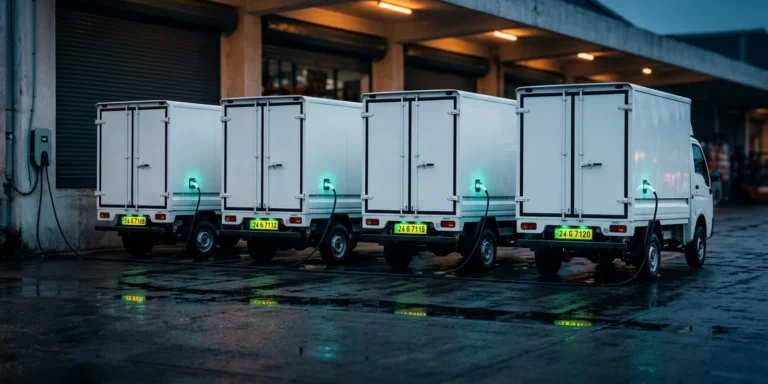
For fleets running two to three delivery waves a day, plan a 20-30 minute DC fast-charge top-up at the depot between waves rather than waiting for SOC to drop below 20%. DC fast charging on vehicles like the Euler HiLoad EV can add roughly 50 km of range in about 15 minutes — enough to cover a full afternoon wave without a long stop. For vans on longer outer-zone routes, mark a public or partner charger near the midpoint of the route as the designated top-up stop, and build that 15-20 minutes directly into the route plan rather than leaving it to driver discretion.
This is where remote charging session management earns its keep — a supervisor can see every vehicle’s live SOC and charging status on one screen and adjust wave timing before a van runs into trouble, instead of finding out from a driver’s phone call.
Driver Communication And Real-Time Dispatch
Most last-mile fleets still run dispatch through phone calls and group-chat messages, which works at 10 vehicles and breaks down at 50. A simple communication cadence — morning briefing, in-app route confirmation, one mid-shift check-in per wave, and an end-of-shift handover note — keeps drivers and supervisors aligned without constant calls. In practice, teams usually find that once SOC, location and route status are visible to the dispatcher in real time, the volume of “just checking in” calls drops sharply, freeing the supervisor to manage exceptions instead of routine status checks.
Exception Handling: When Things Go Wrong Mid-Shift
Every last-mile fleet manager, regardless of fleet size, deals with the same three recurring exceptions. A documented response for each keeps the day’s SLAs from unravelling:
Depot charger outage: reroute the next vehicle in the queue to the nearest public or partner charger and flag the outage for maintenance immediately — don’t let vehicles queue behind a dead charger.
Driver no-show: reassign that vehicle’s route to the lowest-utilised driver already on shift rather than leaving deliveries unassigned for the morning wave.
SOC miscalculation or unexpected traffic delay: shorten the remaining route or swap the vehicle mid-shift with one returning to the depot, rather than risk a stranded van.
The common thread across all three is speed of detection. A supervisor who only finds out about a charger outage or a stranded van from a driver’s phone call is already 20-30 minutes behind. Dashboards, alerts and live SOC data close that gap.
EV Last Mile Fleet Operations Checklist: Printable Daily Checklist
Print or copy this checklist for depot supervisors to run through at shift start, mid-shift, and shift close:
SHIFT START
☐ Pull overnight SOC for every vehicle
☐ Flag vehicles below 70% SOC for a top-up window
☐ Confirm driver attendance and vehicle assignment
☐ Note maintenance holds and reassign affected routes
☐ Brief drivers on route, delivery windows and designated charge stops
MID-SHIFT (per wave)
☐ Check live SOC and location for all active vehicles
☐ Confirm the 20-30 minute charge window is on track for each van
☐ Log any delivery delays, driver check-ins or exceptions
☐ Resolve charger outages or no-shows per the exception playbook
SHIFT CLOSE
☐ Confirm all vehicles are on overnight charge
☐ Log completed drops vs. planned drops per vehicle
☐ Record any exceptions and resolution time for the daily ops review
☐ Flag vehicles needing maintenance before the next shift
How YoMobility Puts This On One Screen
Every step above — SOC checks, route assignment, charge windows, driver communication and exception handling — is easier when it lives on one screen instead of split across a telematics app, a charging network app and a WhatsApp group. An AI-powered operating system like YoMobility surfaces real-time SOC, charging session status and driver payment data for each vehicle and driver, so a supervisor can run the entire day from a single dashboard rather than reconciling data from three different sources.
At the end of the week, that same data rolls up into fleet reporting — missed-delivery counts tied to charging delays, charger utilisation by depot, and driver adherence to planned routes — so the daily playbook becomes a feedback loop rather than a one-time setup. Talk to YoMobility to see how this playbook maps onto your specific fleet size and depot layout.
Frequently Asked Questions
Common questions from last-mile fleet supervisors running electric vans and cargo three-wheelers.
Most Indian last-mile fleets use 70% SOC as the trigger for a pre-shift top-up — below that, a van risks running short on longer or outer-zone routes. Vehicles above 70% can generally be dispatched straight from overnight charge without a delay.
Less than most fleet managers expect. Quick-commerce and e-commerce last-mile vans in Indian metros typically cover 60-100 km a day across several short delivery loops — well inside the 100-150 km realistic range of vehicles like the Tata Ace EV or Euler HiLoad EV.
Reroute the next vehicle in the queue to the nearest public or partner charger immediately, and flag the outage for maintenance in parallel. Waiting for the outage to resolve before rerouting is the single biggest cause of cascading delivery delays.
By surfacing SOC, charging status, location and driver payment data on one dashboard, a platform like YoMobility’s EV fleet management software removes most of the phone calls a dispatcher would otherwise make just to check vehicle status, freeing them to manage exceptions instead of routine check-ins.
Talk to YoMobility to see how real-time SOC, charging and payment data can run your daily shift-planning, routing and exception-handling workflow from one screen.
What happens next?
Fleet ops audit — shift, routing and charging patterns
Custom daily playbook for your depot and fleet size
Cost and SLA-impact projection based on your route data
Ongoing dashboard support and dispatcher onboarding