
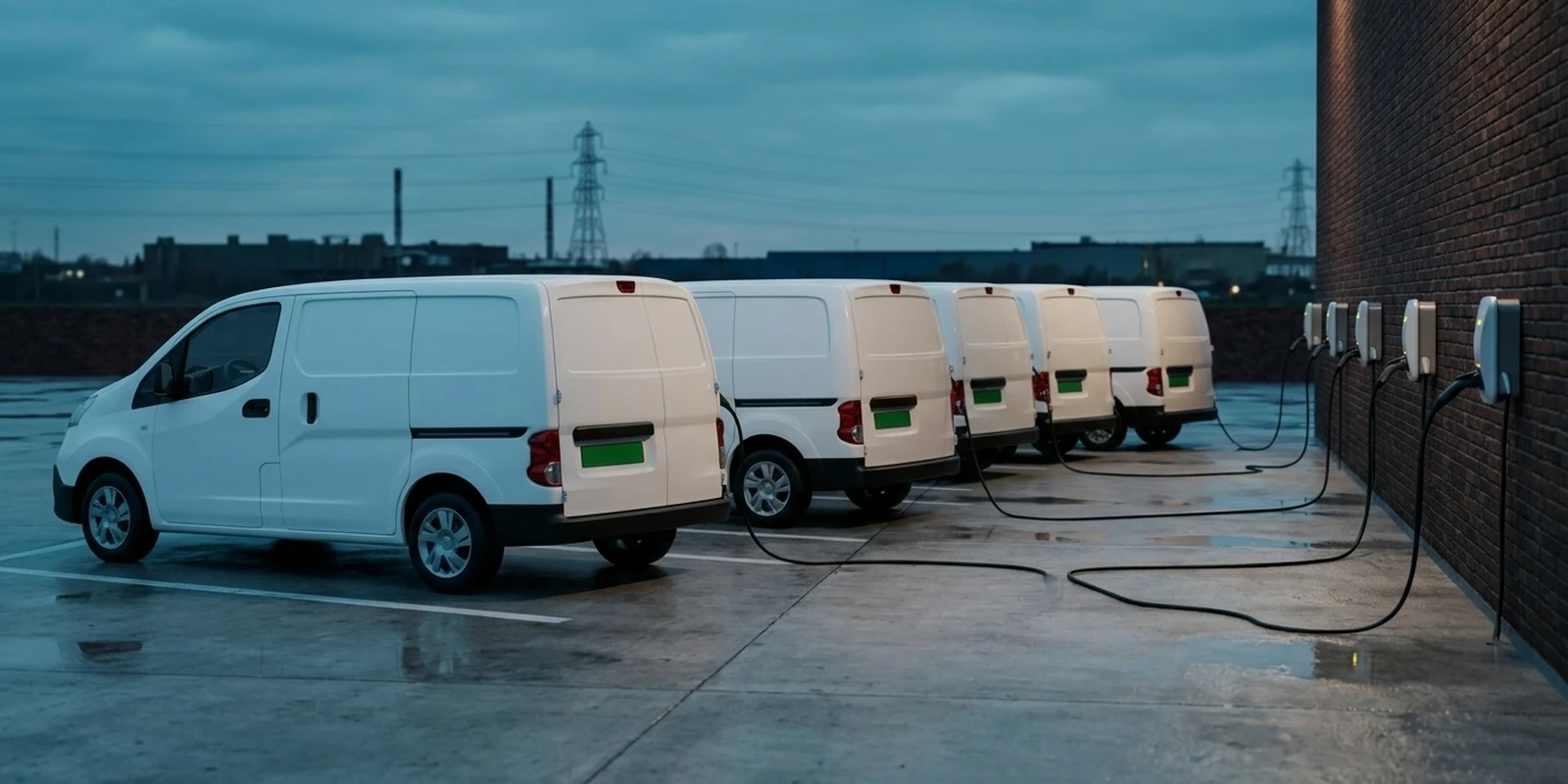
Can Your Electric Fleet Earn Carbon Credits?
💡 Carbon Credit Trading Scheme: Key Highlights
- Road transport fleets are not obligated entities. The compliance mechanism covers energy-intensive industry moving out of the PAT scheme — aluminium, cement, chlor-alkali, pulp and paper, petrochemicals, petroleum refineries and textiles, with further sectors notified in tranches. No road fleet is on that list.
- A fleet can only generate certificates through the offset mechanism, and only against a published methodology. There is currently no approved methodology for electrifying a commercial road fleet.
- The only transport methodology in existence is still a draft — BM TR06.00X, Mass Rapid Transit System, open to stakeholder consultation. That is metro and bus rapid transit, not a 50-van delivery fleet.
- Additionality is the gate that bites hardest. BEE’s own tool BM-T-001 asks whether the reduction would have happened anyway — and a fleet that electrified because the economics already worked has documented its own answer.
- Your emissions data still has a price — it is just not paid by an exchange. It is paid by a customer’s Scope 3 report, a shipper tender score, a BRSR disclosure and a sustainability-linked loan covenant.
If a consultant has told your board that your electric vans are sitting on a pile of tradeable carbon credits, this one is for the sustainability leads and CFOs who now have to either sign off on that claim or kill it. Measured against how India’s carbon credit trading scheme is actually written, the honest answer is mostly no — not never, and not forever, but not the way the pitch describes it.
The reason is structural rather than bureaucratic. The carbon credit trading scheme is a compliance market built around notified industrial sectors, and road transport is not one of them. Your 50 electric vans in Delhi genuinely avoid emissions, and that avoided tonne is real. It simply is not, by default, a certificate you can sell on a power exchange.
How India’s Carbon Credit Trading Scheme Is Actually Built
The Ministry of Power notified the Carbon Credit Trading Scheme, 2023 through S.O. 2825(E) on 28 June 2023, under section 14(w) of the Energy Conservation Act, 2001. The plumbing tells you who it was designed for: the Bureau of Energy Efficiency administers it, Grid Controller of India Limited runs the Registry, the Central Electricity Regulatory Commission regulates trading, and the certificates change hands on power exchanges.
The compliance mechanism trades a rate, not a tonne
Obligated entities must hit a greenhouse gas emission intensity target. MoEFCC notified those through the Greenhouse Gases Emission Intensity Target Rules, 2025 (G.S.R. 739(E), 8 October 2025), and the critical detail is the unit: targets are set in tCO₂e per equivalent output or product, by compliance year, in a schedule attached to the rules.
Certificates then arise by formula: subtract the intensity a plant achieved from its target, multiply by the units of equivalent product it made that year, and that is its certificate issuance for the year. That is the whole problem for a fleet: the formula needs a denominator, a tonne of cement or a kilolitre of refined product. A logistics operation has no notified equivalent output, so there is nothing for it to act on.
Who is actually an obligated entity
In the scheme’s own words, an obligated entity is a registered entity notified under the compliance mechanism and given an emission-reduction target. The sectors moving across from the older Perform, Achieve and Trade scheme are aluminium, cement, chlor-alkali, petrochemicals, petroleum refineries, pulp and paper and textiles; thermal power was explicitly not transitioned. Every name is heavy industry with a physical, meterable product.
That list has moved more than once — one Lok Sabha reply cites seven sectors while BEE’s own carbon market page lists more, purely because notification happened in stages. Check it against BEE, not any article, this one included. What has never changed is the absence of road transport.
A fleet-owning company is therefore a non-obligated entity under the carbon credit trading scheme, which carries two rights: buy Carbon Credit Certificates voluntarily, and — since the December 2023 amendment — generate them, but only via the offset mechanism. For scale, the government’s Indian Carbon Market portal showed 188 compliance registrations against 65 offset registrations at the time of writing.
| Compliance mechanism | Offset mechanism | |
|---|---|---|
| Who it covers | Obligated entities — notified energy-intensive industrial sectors given an intensity target | Non-obligated entities registering voluntary mitigation projects |
| Unit it works in | tCO₂e per unit of equivalent output or product | tCO₂e reduced, removed or avoided by a registered project |
| How a certificate arises | By formula: (target intensity − achieved intensity) × output produced | By registering a project under a published sectoral methodology, then third-party verification |
| Participation | Mandatory for listed sectors; thermal power not transitioned from PAT | Voluntary, and gated on a methodology existing for your activity |
| A commercial road fleet | Not covered — no notified sector, no equivalent-output denominator | No approved methodology today; only a draft mass-rapid-transit one exists |
The Offset Route, And The Gate Nobody Mentions
The offset mechanism is the door that is theoretically open. The Ministry of Power’s amendment S.O. 5369(E) of 19 December 2023 defined it as non-obligated entities registering projects to account for emission reduction, removal or avoidance — and made BEE responsible for identifying the sectoral scope, developing the methodologies and publishing them, with projects registered “in accordance with the published sectoral methodologies”. That clause answers the question in the title: you register against a published methodology, or not at all.
There is no methodology for your vans
The approved methodology list on the official Indian Carbon Market portal is short and sector-coded: energy (grid-connected renewable generation, hydrogen from water electrolysis, electricity and heat from biomass), industries (energy efficiency and fuel switching at industrial facilities, hydrogen from biogas methane), waste (landfill methane recovery, landfill gas flaring or use, compressed bio-gas), forestry (mangrove afforestation and reforestation, afforestation of non-wetland land) and agriculture (livestock and manure methane, improved rice cultivation).
Not one is a road-transport methodology. When the Ministry of Power announced the offset procedure and its first eight methodologies, the activities it named were renewable energy including hydro and pumped storage, green hydrogen, industrial energy efficiency, landfill methane and mangrove afforestation. Replacing diesel trucks with electric ones was not among them, and still is not.
Transport appears on that page exactly once, in the column for methodologies open to stakeholder consultation: BM TR06.00X, Mass Rapid Transit System — a draft, and one aimed at metro and bus rapid transit, not a delivery fleet. The door is not bolted shut forever, but there is nothing behind it today a 3PL or a taxi operator could register.
Additionality is the second gate, and it is the one that bites
Suppose a fleet methodology is notified next year. You would then meet the requirement that has sunk more offset projects than paperwork ever has. BEE publishes it as a numbered instrument — BM-T-001, the combined tool to identify the baseline scenario and demonstrate additionality — and it asks one question: would this reduction have happened anyway, without the credit revenue?
That puts a well-run Indian fleet in an awkward spot. If your case already worked on total cost of ownership — lower energy cost per kilometre, fewer moving parts, accelerated depreciation — your own board papers document that you were electrifying regardless. That is precisely what a verifier looks for, and precisely what fails. The stronger your commercial case, the weaker your additionality case.
A fleet that electrified because the numbers worked cannot easily claim the reduction was additional. A fleet that only electrified because of credit revenue would be additional — but no Indian fleet has ever been in that position, because no such revenue has been available to road transport. Treat any pitch that glosses over this as a pitch that has not read BM-T-001.
And then measurement, reporting and verification
Even a project clearing both gates is not self-certifying. Verification is done by Accredited Carbon Verification Agencies accredited by BEE, and that machinery is still being built out — BEE was still inviting comments on provisionally eligible agencies through 2026. Registration means a project design document, a monitoring plan and a paid verification cycle: costs heavy industry absorbs into a large tonnage, and a few hundred vehicles may not.
What Your Fleet’s Emissions Data Is Worth Without A Credit
Having established that a fleet cannot mint certificates under the carbon credit trading scheme, the usual next conclusion is that its emissions data is a compliance chore. It is not. That data has a real market price in India today — paid by customers, tender committees and lenders rather than by an exchange, and paid far sooner.
Your customer’s Scope 3 is your revenue
The GHG Protocol Corporate Value Chain (Scope 3) Standard splits value-chain emissions into fifteen categories, and the freight you move lands in two: category 4, upstream transportation and distribution, and category 9, downstream. Your customer cannot report a number you cannot give them — so between a carrier with audited per-shipment emissions and one with an industry average, the audited carrier wins. That is how 3PLs turn an electric fleet into a shipper-contract win.
Disclosure and tender scoring
The same dataset feeds your own disclosure obligations and your customers’ procurement scorecards. We will not re-explain BRSR here: the boardroom ESG case for an electric fleet covers why it reached the board, and our guide to producing the sustainability report covers turning vehicle logs into disclosure-ready numbers. The narrow point here: a disclosure auditor wants nearly the same evidence trail a carbon verifier would.
Green financing covenants
Sustainability-linked lending is the third buyer. These facilities price a margin adjustment off a measured operating metric — grams of CO₂ per tonne-kilometre, kWh per kilometre, share of fleet kilometres run electric — tested annually against evidence. The covenant does not care whether your reduction was additional, only whether the number is measured consistently and survives review. A fleet that cannot produce that series finds out during diligence.
All three want the same four things, which is why proper CO₂ tracking earns its keep long before any carbon market opens to transport: per-vehicle energy, per-trip distance, a stated emission factor, and an export someone else can check.
What To Do Now: The Discipline That Keeps Every Option Open
The practical answer is not “no, drop it”. It is: not through this scheme today, so build the measurement base that pays off under every scenario. Four habits do most of the work, and none needs a carbon consultant.
1. Measure per vehicle and per session, in kWh
Fleet-level averages are the commonest reason an emissions claim cannot be verified by anyone — verifier, auditor or shipper. What survives scrutiny is energy delivered per charging session, tied to a vehicle identity and reconciled against odometer distance for the same period, with depot and public charging kept separate. That reconciliation is what a fleet operating system like YoMobility exists to do.
2. Record the baseline before the diesel leaves
Every reduction claim is a comparison against a counterfactual, and most fleets destroy theirs without noticing. Once the old vehicles are sold or scrapped, their fuel records, odometer histories and route profiles are gone — and with them any defensible statement of what those routes used to cost in litres and in tonnes. Archive that set before the handover. It is the only item here you cannot buy back.
3. State your emission factor, and keep the source
An electric fleet’s emissions depend on the grid factor applied to its kWh, and factors get revised. Record which factor and which vintage you used, keep the published source, and never quietly swap factors between reporting years — a restated series with no note attached is the fastest way to lose a reviewer. Meter rooftop solar or a PPA separately rather than blending it into an average.
4. Store it as evidence, not as a dashboard
A dashboard shows this month. Evidence survives four years: timestamped, unedited, exportable to a format a third party can open, with a documented retention period. That is the standard a project design document faces, and the one a lender’s diligence team already applies.
If BEE does publish a road-transport methodology, the fleets registering on day one will be those already holding four years of clean per-vehicle data — not those who start collecting when the notification lands. And if it never comes, the same dataset still wins the tender, satisfies the disclosure and unlocks the loan margin.
Frequently Asked Questions
Not today. A commercial road fleet is not an obligated entity under the compliance mechanism, so it receives no intensity target and no certificates by formula. Its only possible route is the offset mechanism, which requires registering against a methodology BEE has published — and none currently covers road-fleet electrification. The single transport methodology in existence, BM TR06.00X for mass rapid transit systems, is still a draft open to stakeholder consultation.
Energy-intensive industry. The sectors transitioning from the Perform, Achieve and Trade scheme are aluminium, cement, chlor-alkali, petrochemicals, petroleum refineries, pulp and paper, and textiles, with thermal power plants explicitly not transitioned and further sectors notified in later tranches. Because the list has been extended in stages, check it against the Bureau of Energy Efficiency’s carbon market page rather than a secondary source.
Additionality asks whether the emission reduction would have happened without credit revenue, and BEE’s BM-T-001 combined tool sets out how that is demonstrated. If your fleet electrified because total cost of ownership already favoured it, your own investment case is evidence that the reduction was going to happen anyway — which is precisely what the test screens out. The stronger the commercial case, the weaker the additionality argument.
Yes. The scheme defines a non-obligated entity as a registered entity that can purchase Carbon Credit Certificates on a voluntary basis, and the December 2023 amendment extended that to generating them under the offset mechanism. Buying is straightforward — and it is also the opposite of what most fleets are asking. Purchasing certificates is a cost that offsets residual emissions, not a revenue line that rewards your electrification.
Sell it to the three buyers who already pay for it: shippers who need audited per-shipment figures for Scope 3 categories 4 and 9, procurement teams scoring carriers on measured emissions, and lenders pricing sustainability-linked covenants off an operating metric. All three want per-vehicle energy, per-trip distance, a stated emission factor and an exportable record — the same evidence base an offset project would need if a methodology ever arrives.
Sources: Bureau of Energy Efficiency — Carbon Market | Indian Carbon Market — Offset Mechanism, approved methodologies | Ministry of Power, S.O. 5369(E) — CCTS offset amendment | MoEFCC — Greenhouse Gases Emission Intensity Target Rules, 2025 | PIB / Ministry of Power — Offset Mechanism methodologies approved | GHG Protocol — Corporate Value Chain (Scope 3) Standard
Manage Your Fleet’s Emissions Evidence Today
Per-vehicle kWh, per-trip distance, depot and public charging kept separate, and an export a shipper’s auditor or a lender’s diligence team can actually check. See how YoMobility builds that record while your fleet runs.
Book a Free Demo