
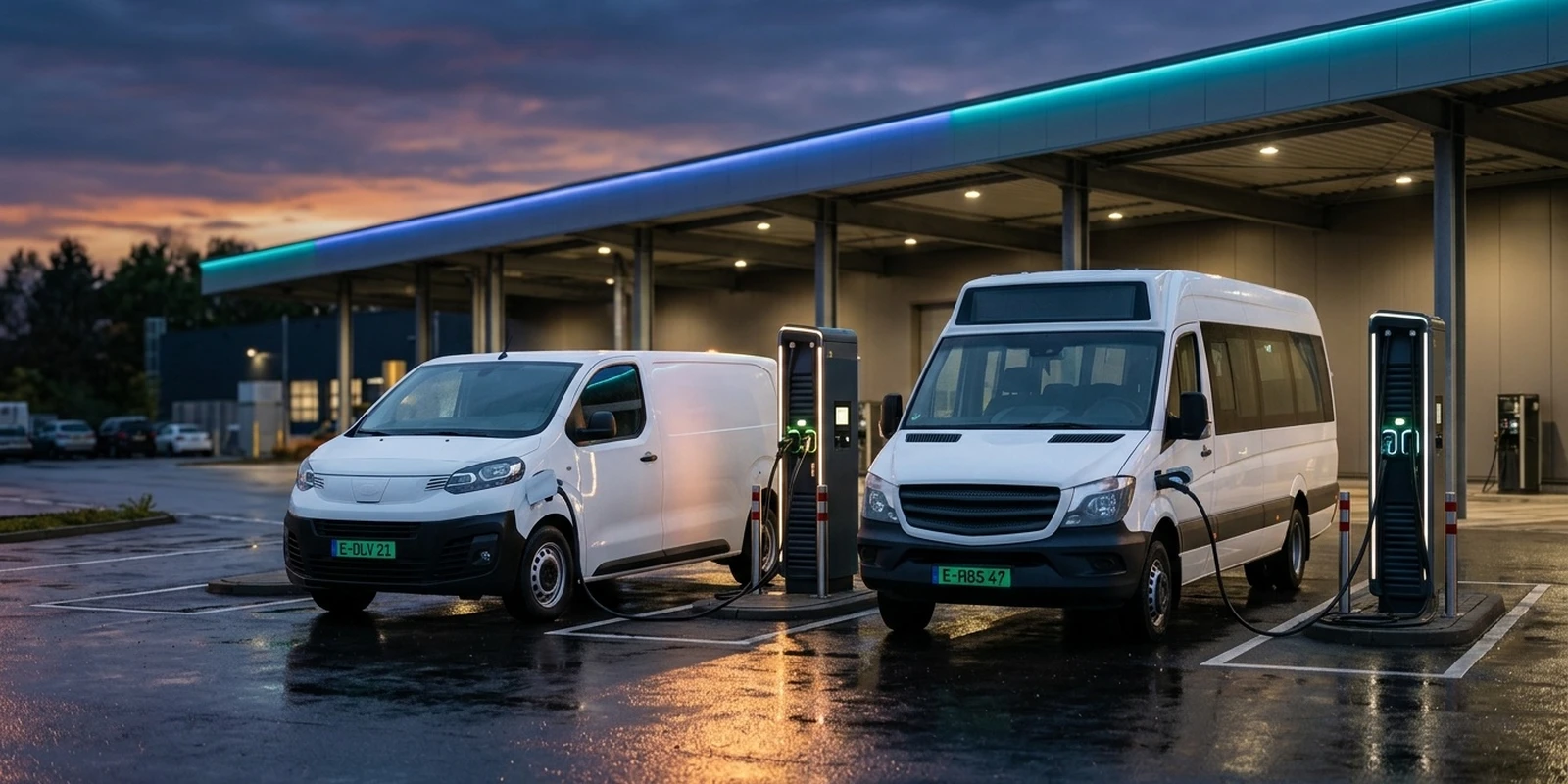
EV Fleet Tariff Configuration: Dynamic Pricing In YoMobility
⚡ EV Fleet Tariff Configuration: Key Highlights
- India’s own charging-infrastructure tariff cap already assumes time-based pricing — BEE’s ceiling for public charging stations is ₹3.72/unit in solar hours vs. ₹4.37/unit outside them for AC slow charging, and ₹11.94 vs. ₹14.05/unit for DC fast charging.
- Delhi’s flat EV-only DISCOM tariff is ₹4.50/kWh; Maharashtra’s MSEDCL EV rate moved to ₹9.10/unit in mid-2025 — a fleet spanning two states already needs at least two base rates before time-of-day is even added.
- Time-of-Day (ToD) tariffs are now mandatory for commercial and industrial connections above 10 kW — most depot connections — so depot bills are already time-differentiated whether or not your internal pricing reflects it.
- Tariff configuration only pays off once it’s wired into invoicing and driver reimbursement — a rate table nobody connects to billing is just a spreadsheet.
- Urban taxi fleets need driver-type rules (owned vs. leased vehicles); corporate transport fleets need route and shift-based rules tied to cost centers.
Most EV fleets start with one number: a single ₹/kWh rate applied everywhere a vehicle plugs in. That works for the first 10 vehicles. It breaks down the moment a fleet is charging at drivers’ homes, at a depot on its own commercial connection, and at public DC fast-charging stations on the same day — three locations, three real costs, one flat internal rate. EV fleet tariff configuration is the fix: instead of one blended number, you define pricing rules by location, time window and driver or vehicle type, then let those rules flow automatically into invoicing and reimbursement. This is the hands-on configuration follow-up to the strategic case for treating tariffs as a pricing lever — here we walk through how to actually set it up in YoMobility, using urban taxi and corporate employee-transport fleets as the worked examples.
Why One Flat Charging Tariff Breaks Down Across Home, Depot And Public Charging
A single blended rate is easy to build in a spreadsheet and wrong almost immediately. Home, depot and public charging are three fundamentally different cost structures, not three variations on the same number.
Home charging: driver-side tariffs you don’t control
A driver charging at home is billed on their own domestic slab rate — which varies by state, DISCOM and consumption band, and which the fleet has no direct control over. Reimbursing this at a flat company-wide rate either overpays low-slab drivers or underpays drivers on a higher slab.
Depot and public charging: rates you can actually configure
Depot connections are typically dedicated commercial or EV-category connections, and Time-of-Day (ToD) tariffs are now mandatory for commercial and industrial consumers above 10 kW — so a depot’s own electricity bill is already split into peak, normal and off-peak bands whether or not the fleet’s internal pricing reflects that. Public charging adds a third layer: per-session or per-kWh rates set by the charge point operator, which run well above depot rates, especially for DC fast charging. The Bureau of Energy Efficiency’s own ceiling for public charging stations builds this spread in explicitly — up to ₹3.72/unit in solar hours vs. ₹4.37/unit outside them for AC slow charging, and ₹11.94 vs. ₹14.05/unit for DC fast charging. An AI-powered fleet operating system like YoMobility’s fleet management platform exists precisely to hold these different rate structures side by side without forcing finance teams to reconcile three billing logics by hand every month.
Step 1: Map Every Charging Location Before You Touch Pricing
Configuration only works if the location list is complete and correctly tagged. Before setting a single rate, register every place your vehicles actually draw power:
Depot connections: tag the DISCOM tariff category, not a generic “depot” rate
Each depot should be registered with its actual connection type (commercial, industrial or dedicated EV category), its state/DISCOM, and whether that connection is already ToD-metered. Two depots in the same city on different DISCOMs — say a BSES connection in Delhi at ₹4.50/kWh flat EV rate versus an MSEDCL connection in Maharashtra revised to ₹9.10/unit — cannot share one rate card.
Public charging: capture the network’s rate at the session, not a flat estimate
Public stops should pull the actual per-session cost from the charge point operator rather than apply a flat “public charging” placeholder — DC fast-charging rates vary widely by network and city, and a placeholder number quietly erodes margin on every long-route trip that needs a top-up away from the depot.
Step 2: Set Time-Of-Day Rules For Each Location
Once locations are mapped, layer time-of-day bands on top of each one. Under India’s ToD framework, tariffs during solar hours typically run 10–20% below the normal rate, and peak-hour tariffs run 10–20% above it — commercial EV charging stations specifically have seen a roughly ₹1/unit surcharge added during morning and evening peak windows in several states. In practice, that means configuring three bands per depot — off-peak/solar, normal, and peak — each carrying its own rate, and letting the platform auto-apply the correct band based on when a charging session actually starts rather than when it was scheduled. This is also where session-level remote charging session management matters: without a live timestamp on each session, time-based tariff rules have nothing accurate to attach to.
Step 3: Layer Driver-Type And Route Rules On Top Of Location And Time
Location and time cover the electricity cost side. The third layer covers who is charging and why, which is what actually determines whether a session gets billed to a client, reimbursed to a driver, or absorbed as a depot operating cost.
- Owned vs. leased vehicles — a leased taxi’s charging cost may need to be billed differently than a company-owned one under the lease terms.
- Home charging vs. depot charging — home sessions route to driver reimbursement; depot sessions route to the depot’s own cost center.
- Route type — a short in-city drop and a long highway run that needs a public DC top-up shouldn’t be priced as if both only ever touch depot power.
Configuring these as driver and vehicle cohorts — rather than one-off exceptions — is what keeps the rate table usable as the fleet grows past a handful of vehicles.
Step 4: Link Tariffs To Invoicing And Reimbursement
A tariff table that isn’t connected to billing is just a reference document finance re-types every month. The point of EV fleet tariff configuration is that every charging session — tagged with its location, time band and driver/vehicle cohort — should compute its own cost automatically and route it to the right place: a client invoice, a depot cost center, or a driver’s reimbursement claim. In YoMobility, that means the same rules configured in Steps 1–3 feed straight into consolidated charging invoices across depots and clients, and into automated home-charging reimbursement, instead of finance teams manually pulling session logs and cross-checking them against a spreadsheet of rates.
Worked Examples: Urban Taxi Fleet And Corporate Employee Transport
Two segments configure the same four steps differently.
100 taxis in Bengaluru, mixed home and depot charging, occasional public DC top-ups. Roughly 70 vehicles charge overnight at a depot on a commercial connection; drivers of the remaining 30 owned vehicles charge partly at home. Configuring the depot with an off-peak band tuned to the local DISCOM’s ToD schedule, and tagging home sessions for automatic reimbursement, typically shifts a meaningful share of charging load into the cheapest band without any change in driver behaviour — the software is simply routing sessions to the band they already qualify for. Occasional public DC stops during airport runs are captured at their real per-session rate and billed to the airport-run cost center rather than blended into the average.
50 corporate employee-transport vans in Delhi, single depot, a handful of employee-owned vehicles. With one depot, the configuration is simpler: one location, two or three ToD bands matching Delhi’s flat EV-DISCOM tariff structure, and a route-based rule for the two or three long inter-city routes that need a public top-up. The main value here is on the reimbursement side — the small number of employee-owned vehicles charging at home get their claims computed automatically against actual kWh and domestic tariff, instead of finance approving flat monthly allowances that overpay some employees and underpay others.
Common EV Fleet Tariff Configuration Mistakes To Avoid
- Using one blended rate fleet-wide — it always either overpays for cheap off-peak depot charging or underprices premium public DC charging.
- Letting rates go stale — DISCOM ToD schedules and EV tariff categories do change; Maharashtra’s own EV rate moved from ₹8.47 to ₹9.10 per unit within a single tariff cycle. A rate configured once and never revisited quietly drifts from what the DISCOM is actually billing.
- Skipping driver and vehicle cohort tagging — without it, reimbursement can’t be automated and every home-charging claim needs manual review.
- Estimating public charging costs instead of capturing them — flat placeholder rates for public DC charging understate real cost on every long route that needs a top-up.
Frequently Asked Questions
It’s the process of defining separate charging cost rules by location (home, depot, public), time band (off-peak, normal, peak) and driver or vehicle type, instead of applying one flat ₹/kWh rate fleet-wide, and connecting those rules directly to invoicing and reimbursement.
Yes. Home charging is billed on the driver’s own domestic slab rate and routes to reimbursement; depot charging is billed on the fleet’s commercial or EV-category connection and routes to a depot cost center. Treating them as one rate either overpays or underpays one side.
Whenever your DISCOM revises its tariff order — typically annually, sometimes mid-cycle. Maharashtra’s MSEDCL EV rate moved from ₹8.47 to ₹9.10 per unit within one tariff cycle, so a rate configured once and left untouched will quietly drift from what’s actually being billed.
Yes — once a home-charging session is tagged to a driver cohort and a rate, the claim can be computed automatically from metered kWh instead of relying on flat monthly allowances or manual approval.
Yes, and it’s actually where configuration matters most — each state and DISCOM has its own EV tariff category and ToD schedule, so a multi-state fleet needs a distinct rate card per location rather than one national number.
Sources: Ministry of Power — ToD tariff amendment, PIB | Bureau of Energy Efficiency — EV charging infrastructure portal | Tata Power Delhi Distribution — EV tariff | MSEDCL — Tariff details
Configure Tariffs That Match How Your Fleet Actually Charges
Talk to YoMobility to model your home, depot and public charging tariffs — and connect them to invoicing and reimbursement automatically.